ArtPromptGenerator
✧ Creatures & Monsters Collection

Creature Art Prompt Generator

Imagine a creature that could only exist in your world.

Our creature art prompt generator helps you invent dragons, mythical beasts, alien wildlife and original monsters. Choose a creature theme, shape its anatomy and habitat, and turn a rough idea into a vivid drawing or concept-art prompt.

10 creature themesAnatomy, behavior & surface controlsFor sketching, concept art & AI prompts
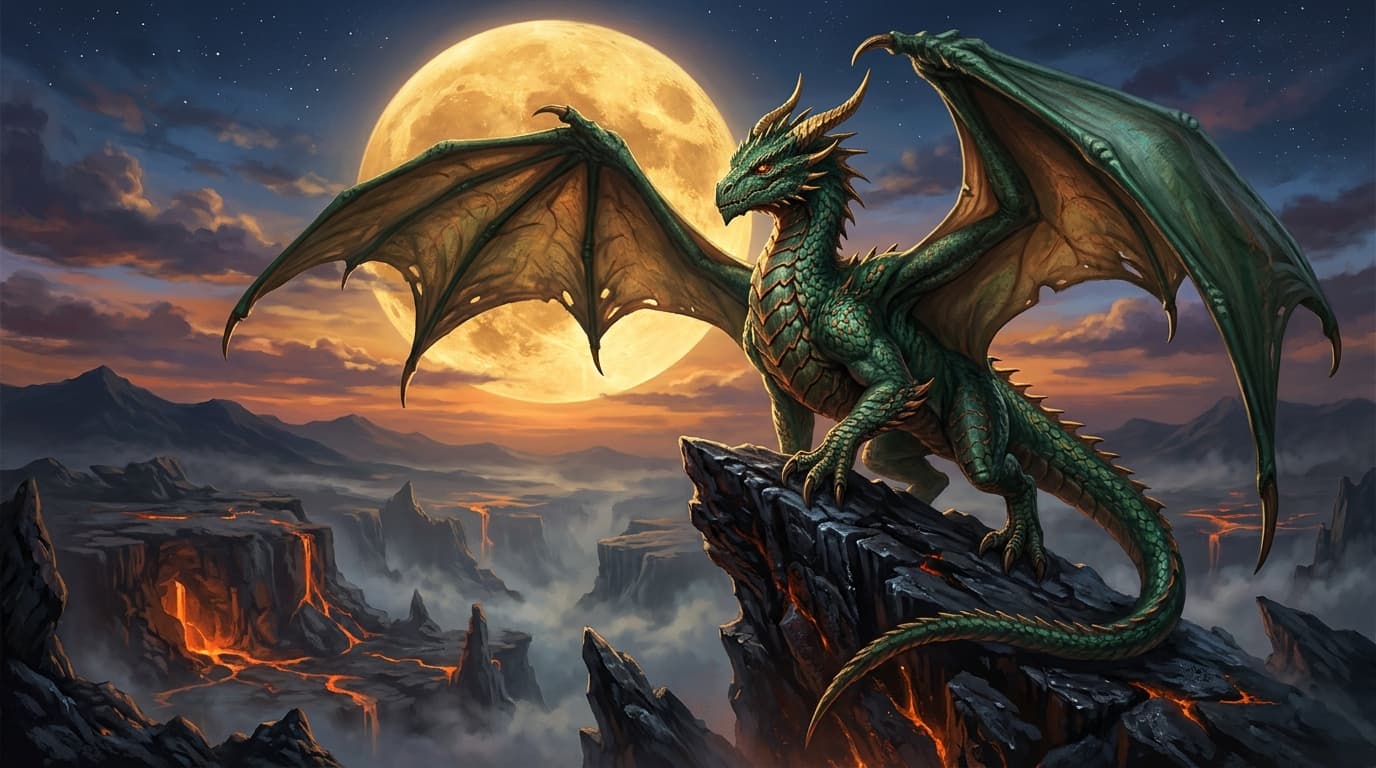
Original digital illustration of a horned emerald dragon perched on a rocky basalt cliff beneath a golden moon
✧ Sketch a world of wild creaturesThe cliffside guardian · Original concept artwork
Your creature-design studio

Build a beast from imagination

Pick a creature family, then refine body structure, surface textures, behavior and habitat into a more believable monster or animal concept.

Selected discipline: Creatures & Monsters
01

Choose your creature theme

From dragons and ocean leviathans to tiny familiars and full anatomical design sheets.

Add species, horn count, limb anatomy or habitat clues. Your custom idea takes priority.
02

Canvas format

Create detailed art prompts you can use with your favorite AI image generator.

Canvas aspect ratio
03

Shape your creature

Describe the anatomy, scale, textures and behavior that give your creature a recognizable design.

✧ Optional Advanced Controls & Engine Flags▼

Fine-tune skeletal anatomy, hybrid combinations, biological plausibility and engine parameters.

Start with a creature worth exploring

Creature & Monster Drawing Prompts to Try

Six original starting points for dragon drawings, monster sketches, alien creature concepts and whimsical fantasy pets. Copy a prompt or adapt it for your next illustration.

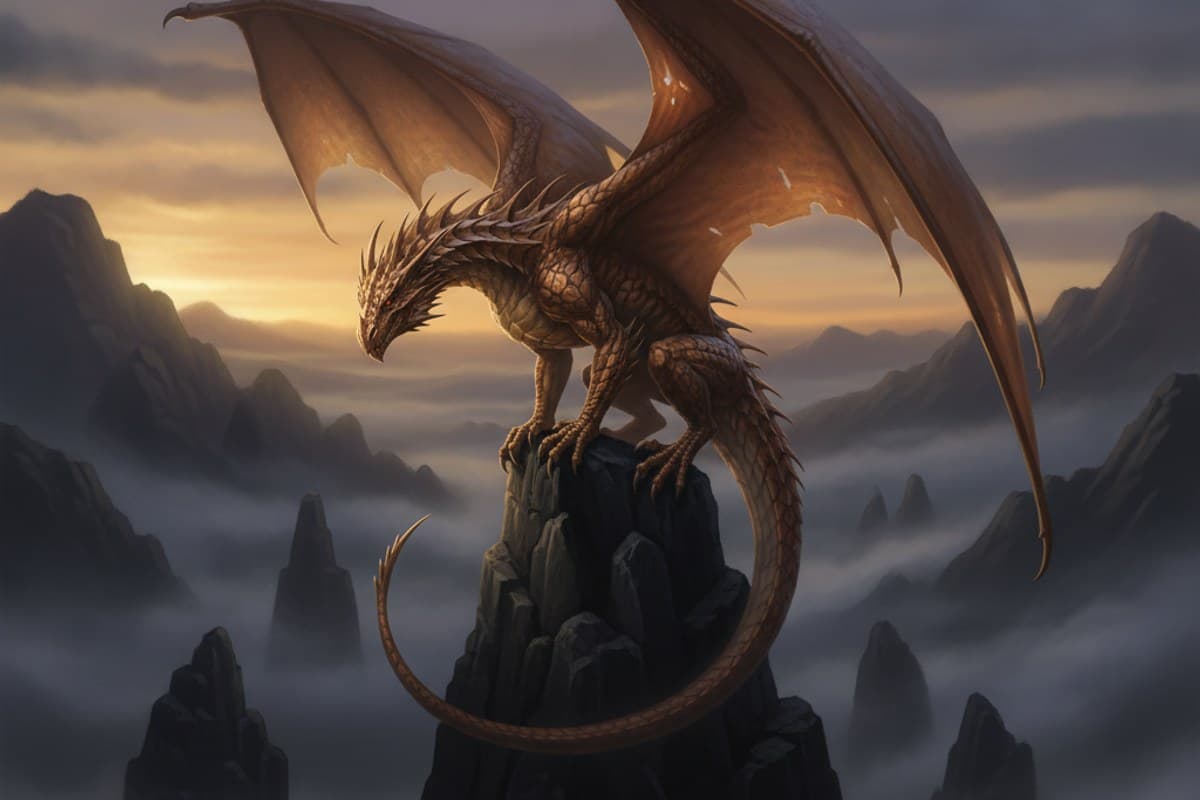
Broad-winged copper dragon perched above black basalt rock pillars in evening mist
Dragons

The Ember-Ridge Guardian

A broad-winged dragon perches above a valley of black basalt pillars. Its forelimbs grip the rock, copper-edged scales catch the evening light, and a barbed tail hangs in the mist. Three-quarter full-body view, readable wing joints, grounded reptilian anatomy, fantasy bestiary illustration.
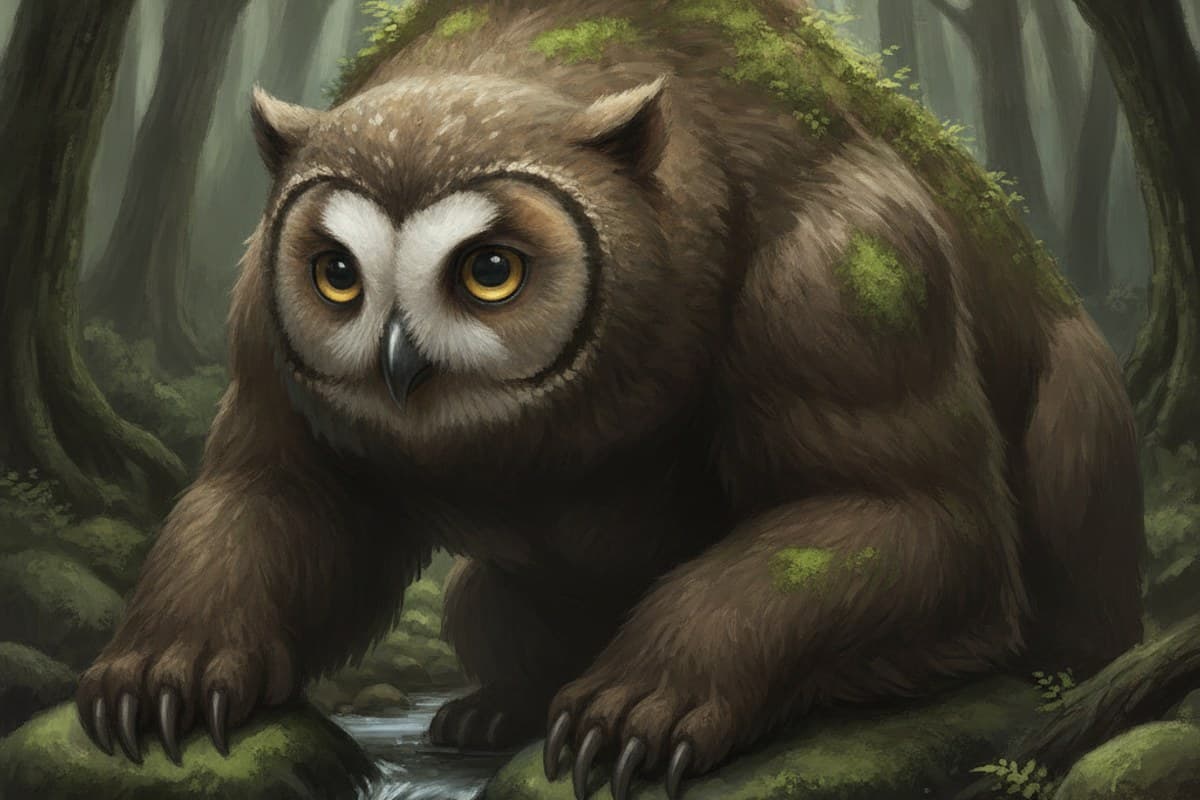
Forest owl-bear creature with feathered face disk and paws pausing at a woodland stream
Animal Hybrids

The Mossback Owl-Bear

A forest creature combines an owl’s feathered facial disk with a bear’s rounded shoulders and powerful paws. Moss grows along its back as it pauses at a woodland stream. Naturalistic anatomy, soft overcast light, subtle feather-to-fur transitions, watercolor field-guide study.

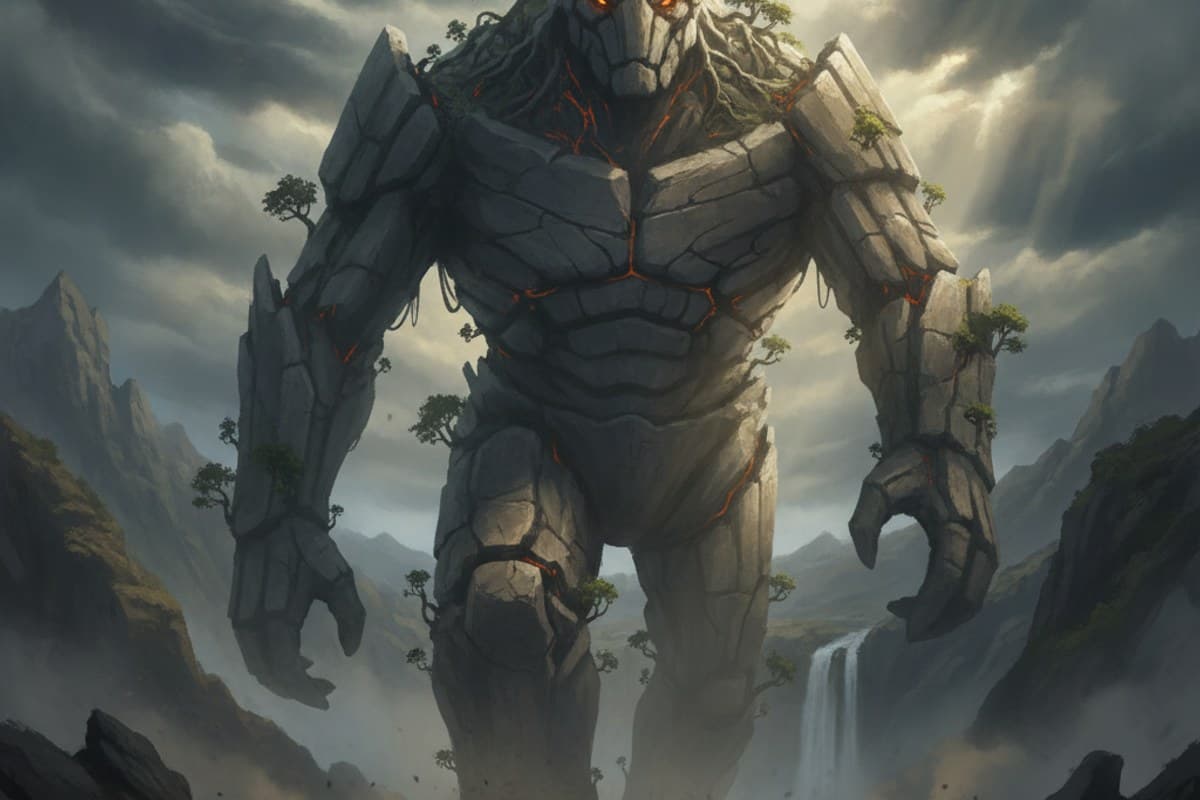
Mountain-sized stone colossus behemoth rising from a foggy plateau with ancient trees
Monsters & Behemoths

The Walking Stone Colossus

A mountain-sized creature rises from a foggy plateau, its layered stone plates cracked by roots and tiny trees. Distant travelers establish scale as its massive front limb shifts toward a ravine. Low camera angle, atmospheric perspective, weighty silhouette, cinematic creature concept art.

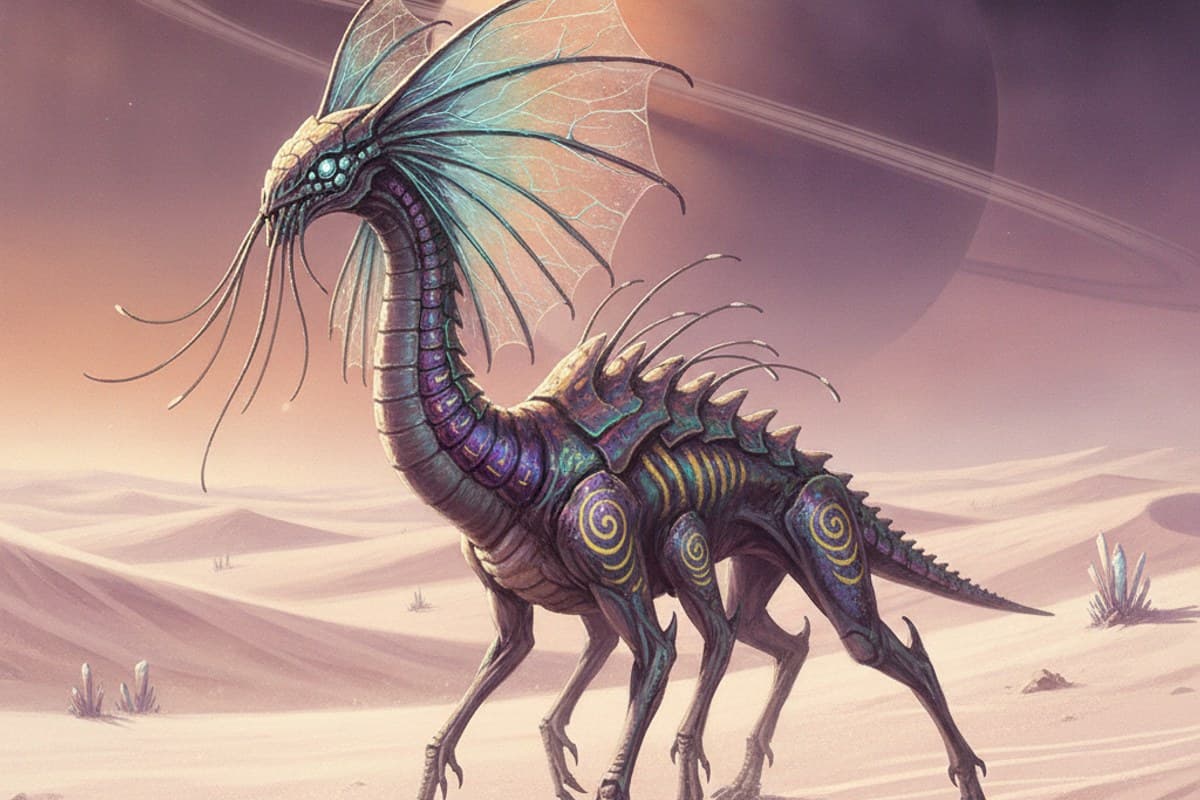
Six-legged alien herbivore creature with translucent neck frills grazing on a pale desert dune
Alien Creatures

The Glass-Dune Grazer

On a pale desert moon, a six-legged herbivore uses translucent neck frills to regulate heat. Thin sensory feelers trace the sand while its wide feet prevent sinking. Plausible alien ecology, clean anatomical landmarks, bioluminescent markings, exploratory science-fiction wildlife illustration.

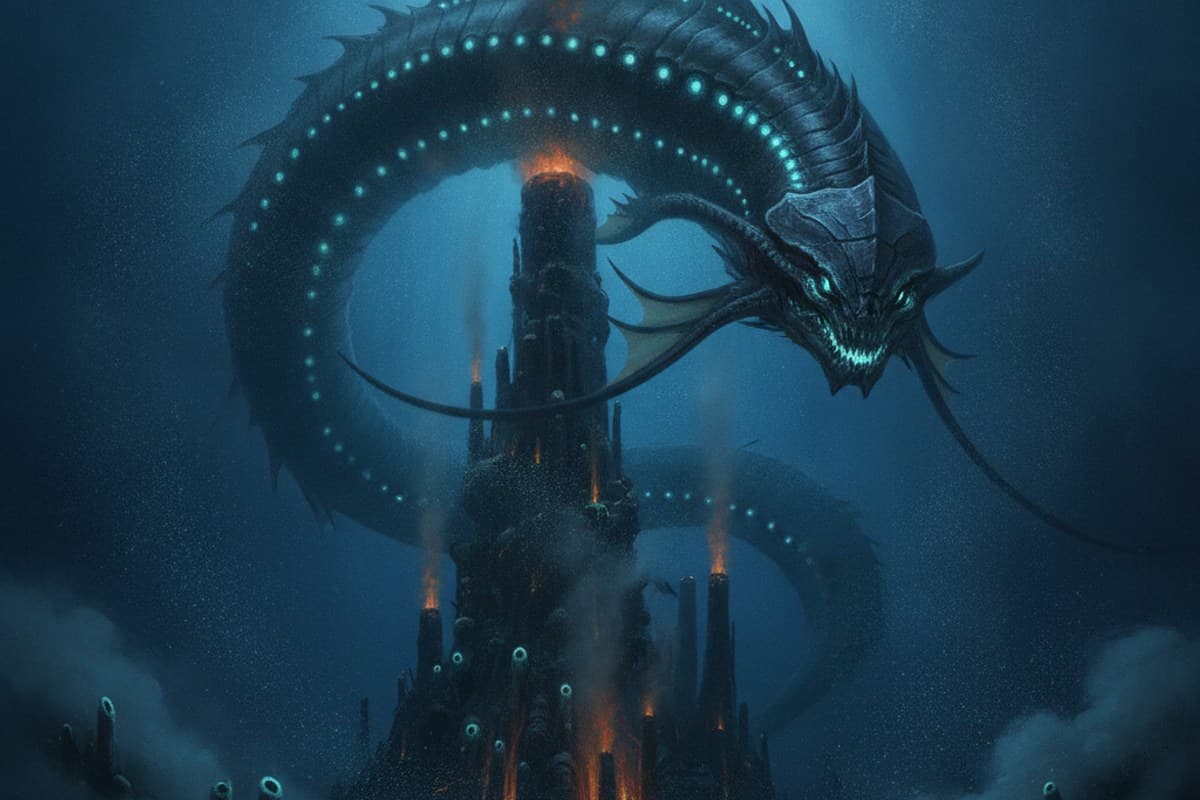
Deep-sea hunter leviathan curving past hydrothermal vents with glowing lantern organs
Sea Creatures

The Lantern-Trench Leviathan

A deep-sea hunter curves past a hydrothermal vent, lantern-like organs glowing along its spine. Long steering fins and a tapered tail suggest efficient movement through cold water. Deep cobalt palette, suspended sediment, believable aquatic anatomy, atmospheric underwater creature painting.

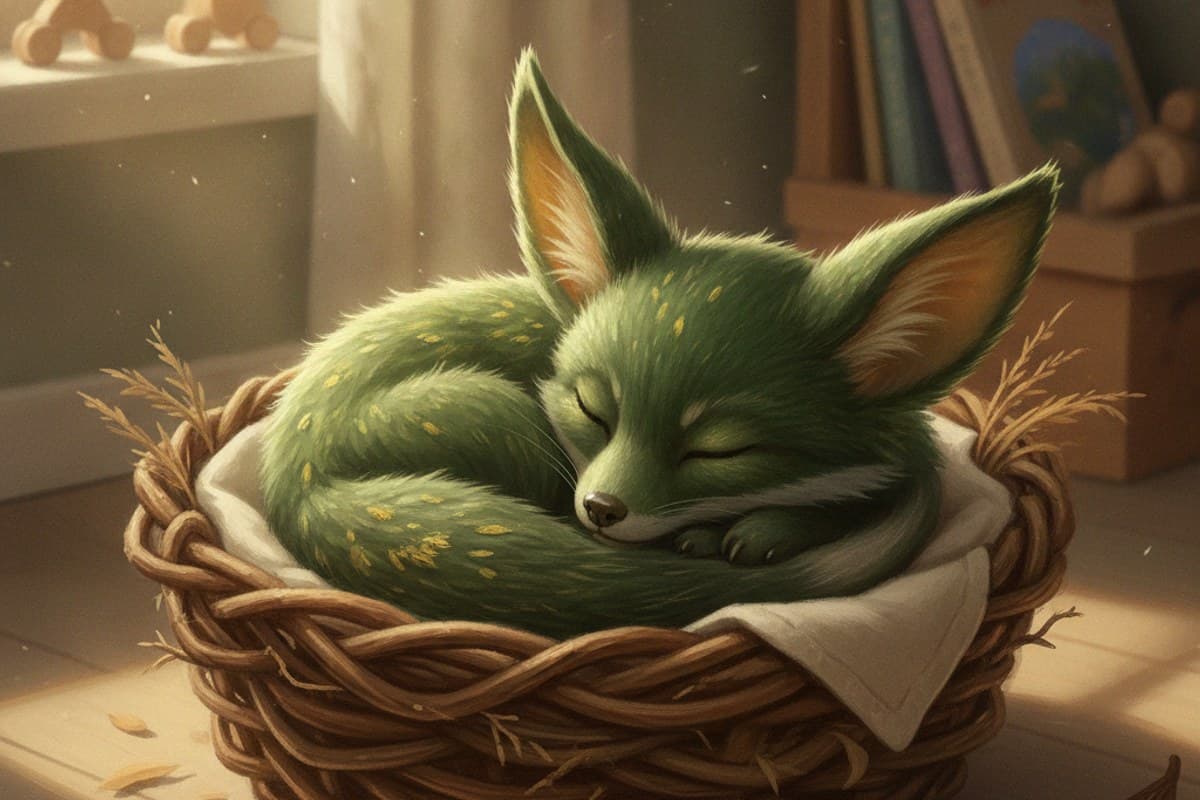
Palm-sized foxlike acorn familiar with leaf ears and velvet fur napping in a woven basket
Cute & Companion Creatures

The Little Acorn Familiar

A palm-sized foxlike familiar with leaf-shaped ears, velvet fur and a curled seedpod tail naps inside a woven basket. Round expressive eyes, gentle proportions, soft morning window light, children’s picture-book creature illustration with warm natural colors.

These examples describe imaginary scenes; they do not create finished pictures. Adapt the subject, framing and style to your own artwork.

The creature-design recipe

From wild idea to believable beast.

Memorable creature designs start with a simple question: how does this animal move, survive and behave in its world?

Whether you're sketching a dragon or inventing extraterrestrial wildlife, connect its body plan to the place it lives. A believable design can still be entirely imaginary.

SilhouetteAnatomyHabitatTextureMovementScale
01 · Start with the body plan.

Decide whether your creature crawls, flies, swims or walks. Give its limbs, spine and joints a consistent job before adding surface details.

02 · Let habitat shape anatomy.

A cave hunter may have broad gripping feet; a sea predator needs a streamlined body. Environment suggests both silhouette and adaptation.

03 · Choose one signature feature.

Maybe it's a frilled neck, segmented armor, glowing antennae or unusual horns. A clear focal trait is often stronger than many competing details.

04 · Show behavior and scale.

A defensive posture, protective stance or cautious movement tells a story. Add a familiar object or natural landmark to establish size.

Creature concept art fundamentals

Design Details That Make Monsters Feel Real

A strong creature drawing balances imagination with visual logic. These four choices help a fantastic beast feel recognizable, expressive and connected to its environment.

Readable Creature Silhouettes

Test the outline first. Horns, wing shape, neck length and tail position help the viewer recognize the creature before seeing individual scales or feathers.

Anatomy & Locomotion

Think about joints, weight distribution and how the creature moves. A heavy six-legged beast and a lightweight glider need very different body structures.

Surfaces, Scales & Texture

Use chitin, fur, scales, feathers or soft skin purposefully. Texture can communicate climate, camouflage, age and how a creature protects itself.

Habitat, Lighting & Mood

Misty cliffs, coral trenches and moonlit forests change how a monster feels. Use depth, atmosphere and light direction to support the creature's story.

Make every choice count

How to Use the Creature Generator Controls

The controls above work together: the creature’s anatomy affects its movement, its environment influences its surface textures, and its behavior brings the scene to life.

Creature type

Sets the main species or hybrid concept, from wyverns and chimera beasts to alien grazers, aquatic hunters and tiny magical companions.

Size

Establishes the creature’s relative scale. Use familiar objects, characters or environmental landmarks to distinguish a pocket familiar from a towering behemoth.

Body structure

Describes the frame, posture, head shape and muscular proportions. Clear anatomy helps avoid conflicting body features in a complex beast.

Number of limbs

Defines legs, arms, wings, fins or tentacles. Consider where these parts connect and whether they make sense for the creature’s movement.

Skin, scales, fur, or feathers

Controls visual surface details and material behavior. Iridescent scales catch light differently from translucent skin, bristled fur or hard chitin.

Behavior

Provides a moment of action or emotion: stalking, guarding young, resting, soaring or investigating something unfamiliar.

Environment

Places the animal in a believable home, whether that is a rainforest canopy, volcanic ridge, frozen tundra or deep-sea trench.

Art style

Sets how the creature is drawn: natural-history sketch, bestiary illustration, stylized creature art or polished cinematic concept design.

Keep the existing Optional Advanced Controls & Engine Flags from the live generator. Their production settings and model mappings are not replaced by this visual reference.

Questions from creature designers

Creature Art & Monster Prompt FAQs

Answers about dragon designs, anatomy, monster drawing ideas, creature sheets and using prompts across art mediums.

What is a creature art prompt generator?+

It creates written ideas for designing dragons, invented animals, mythical beasts and monsters. You choose a creature theme and describe its body, size, texture, behavior, setting and visual style, then use the result as a starting point for your own artwork.

How do I make an original monster design?+

Begin with a clear silhouette and one interesting adaptation, such as long climbing limbs or a shell that opens to reveal wings. Build the rest of the body around how it moves and survives. A memorable monster often needs fewer features, not more.

What should I include in a dragon drawing prompt?+

Mention the dragon’s body type, wing shape, horns, scales, pose, size and habitat. For example, an alpine wyvern with narrow wings and hooked claws suggests a different design from a heavy, four-legged volcano guardian.

How can I make fantasy creature anatomy more believable?+

Check the relationship between the skull, spine, joints and limbs. Think about balance and weight distribution, even for imaginary creatures. Referencing real animals for movement is helpful, but your final design can still be fantastical.

What is a creature design sheet?+

It is a visual reference used to explore one creature consistently. A typical sheet may show front, side and rear views, scale comparisons, color studies, close-ups of special features and notes about its anatomy or movement.

Can I use these prompts for pencil sketches and traditional art?+

Yes. The prompts work as subjects for pencil, ink, charcoal, watercolor, paint or digital illustration. If you draw by hand, treat the AI-model and aspect-ratio options as optional guidance rather than requirements.

How do I create a cute fantasy companion creature?+

Use simple shapes, readable expressions and softer proportions. Describe one or two distinctive features, such as leaf-shaped ears or a glowing tail, and give the creature friendly behavior that matches its design.

How can I design alien creatures that feel unique?+

Start with a habitat—low gravity, dry dunes, floating reefs or a dark ocean—and invent a physical adaptation that fits it. Choose a movement style, sensory organ and texture rather than combining random futuristic features.

Which aspect ratio works best for monster or creature art?+

Square 1:1 can frame a creature head study. Vertical 4:5, 2:3 or 9:16 suits full-body designs and tall monsters. Wide 16:9 and 21:9 allow large wings, environmental storytelling or size comparisons.

Does this tool create finished monster images?+

No. This page provides written creature and monster art prompts. Use them to plan your own drawings or adapt them for a compatible image-generation tool. Selecting a model here describes prompt formatting rather than rendering images on this page.