ArtPromptGenerator
✧ Horror & Dark Art Studio

Horror Art Prompt Generator

Turn a quiet scene into something unsettling.

Our horror art prompt generator helps you explore haunted houses, mysterious figures, cursed objects and nightmare worlds. Choose a dark art theme, shape the mood and lighting, and build a creepy drawing or illustration prompt that feels distinctly your own.

10 horror themesFear, lighting & atmosphere controlsFor drawing, concept art & image prompts
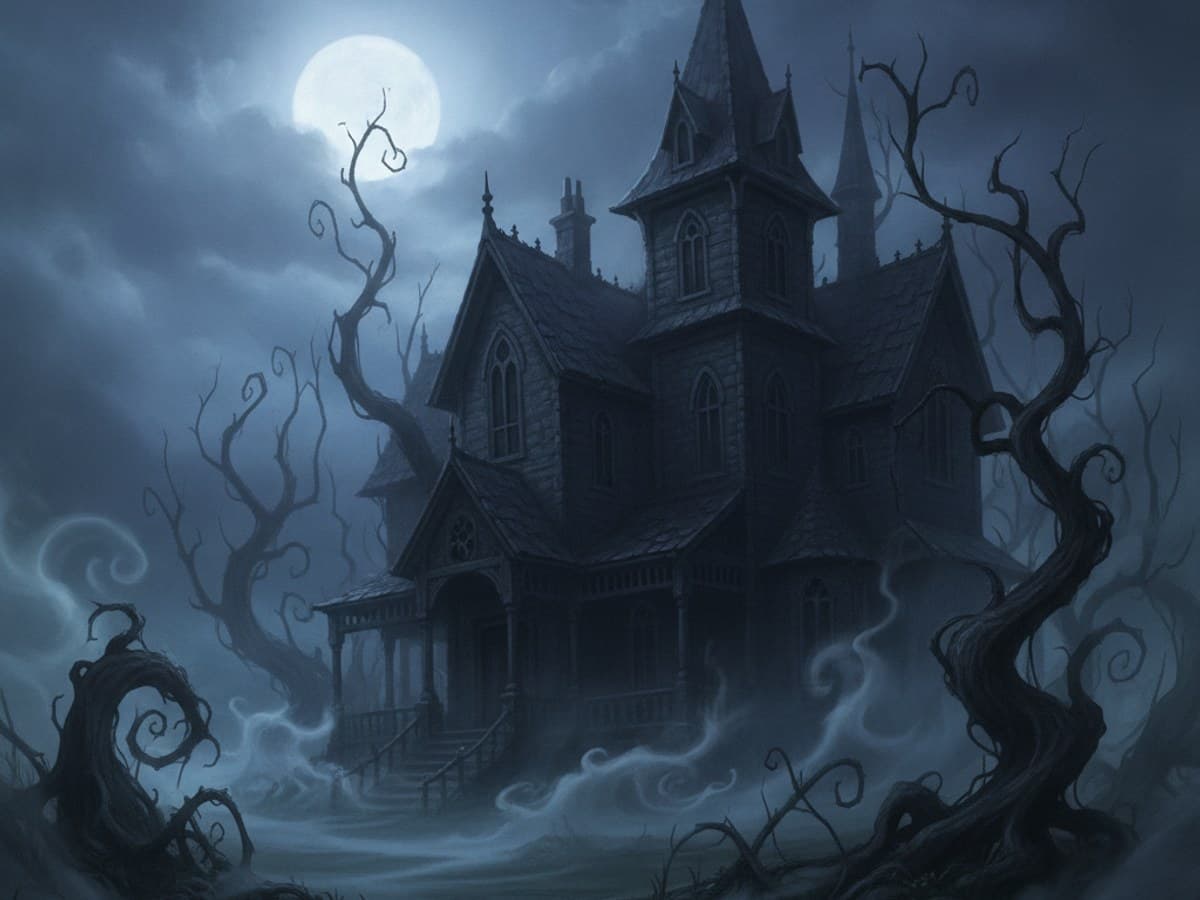
Original digital artwork of a gothic manor with twisted trees and rising fog beneath a pale glowing full moon
✦ Gothic illustrationAn eerie scene begins with atmosphere
Your horror art studio

Build an unsettling scene

Choose a horror theme, then combine subject, fear intensity, mood, light and color into a distinctive dark art concept.

Selected discipline: Horror & Dark Art
01

Choose your horror theme

From uncanny rooms and spectral encounters to cosmic dread and gothic nightmares.

Add a setting, subject or strange detail. Your idea should take priority.

02

Canvas format

Create detailed art prompts you can use with your favorite AI image generator.

Canvas aspect ratio
03

Shape the atmosphere

Control what is visible, what stays hidden, and how the scene builds tension.

85%
85%
✧ Optional Advanced Controls & Engine Flags▼
Production Advanced Controls: Fine-tune psychological dread, symbolic cues, textural decay, and camera composition parameters.
Six original ideas to sketch

Horror Drawing Prompts & Dark Art Ideas

Try these atmospheric horror art prompts for sketchbook studies, gothic illustrations and eerie environment concept art. Copy a prompt, change the details and make it your own.

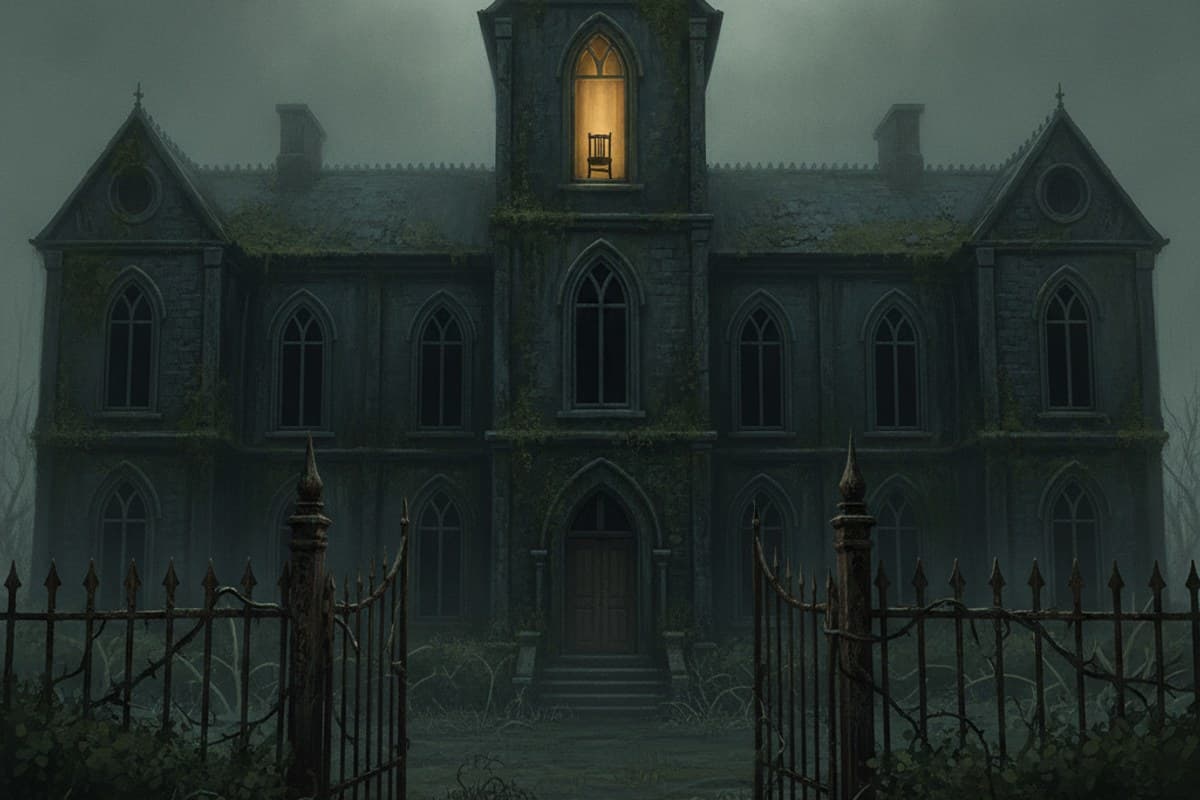
Abandoned gothic manor with overgrown iron gates and solitary lit window in misty autumn fog
Haunted Places

The Last Window at Blackthorn Manor

An abandoned manor stands behind a field of tangled hedges. Every window is dark except one on the highest floor, where a warm lamp reveals a chair facing the wall. Low-angle exterior view, wet stone, overgrown iron gates, soft autumn fog, muted sepia and slate-blue palette, slow-building gothic suspense.
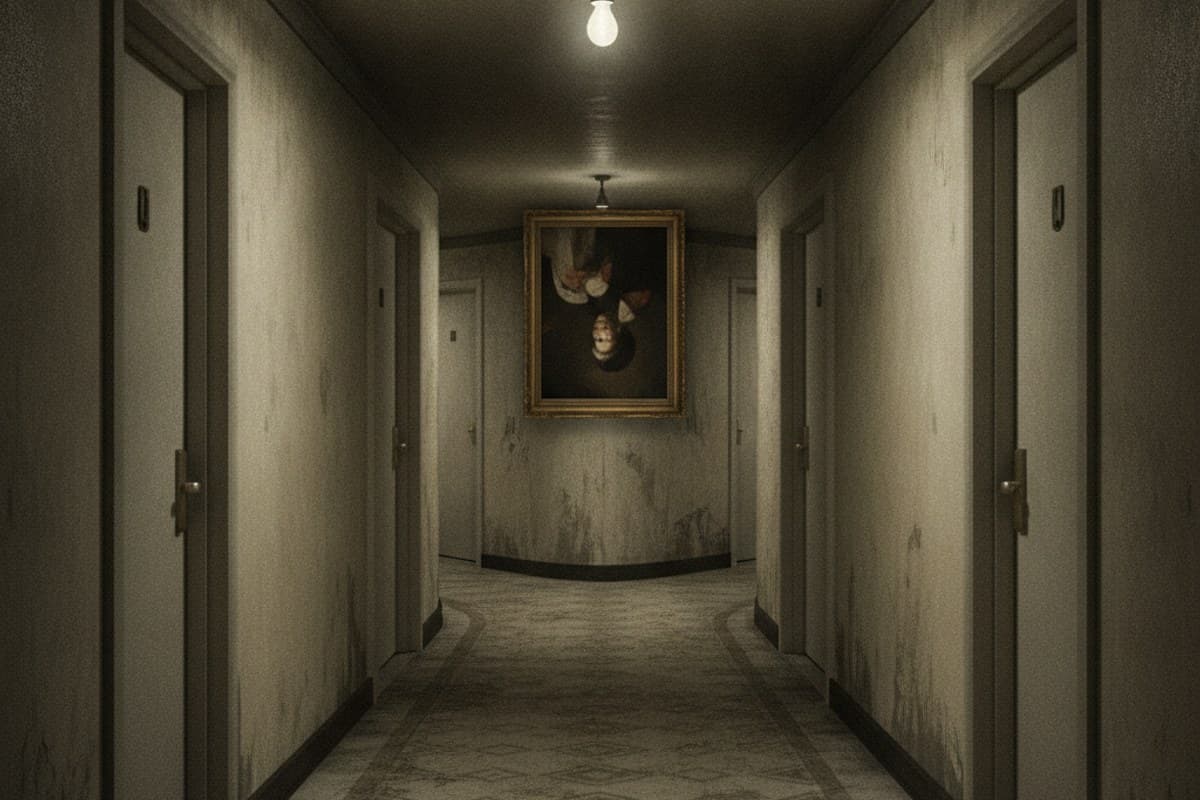
Silent hotel corridor stretching into an impossible distance with repeating numbered doors
Psychological Horror

The Hallway That Repeats

A silent hotel corridor stretches into an impossible distance. Identical numbered doors curve around a corner that should not exist, and a single painting is hung upside down. One flickering ceiling lamp, symmetrical perspective, washed-out cream walls, long negative spaces and a subtle sense that the building is watching.

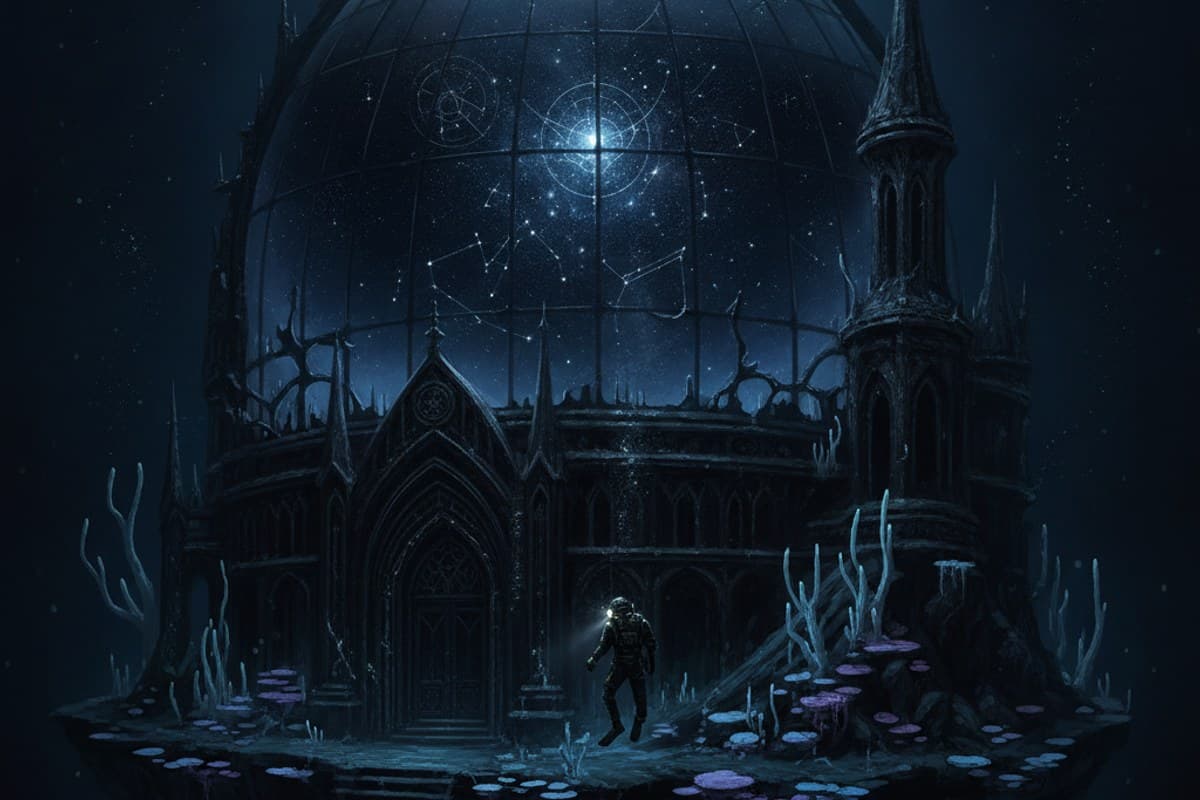
Sunken deep sea observatory with celestial glass dome and diver hovering near the ocean shelf
Cosmic & Eldritch Horror

The Observatory Beneath the Sea

A forgotten observatory rises from a dark ocean shelf, its glass dome reflecting a constellation that does not appear in the sky above. A tiny diver hovers at the entrance for scale. Vast underwater silence, impossible celestial geometry, faint bioluminescence, cinematic wide shot and an atmosphere of cosmic mystery.

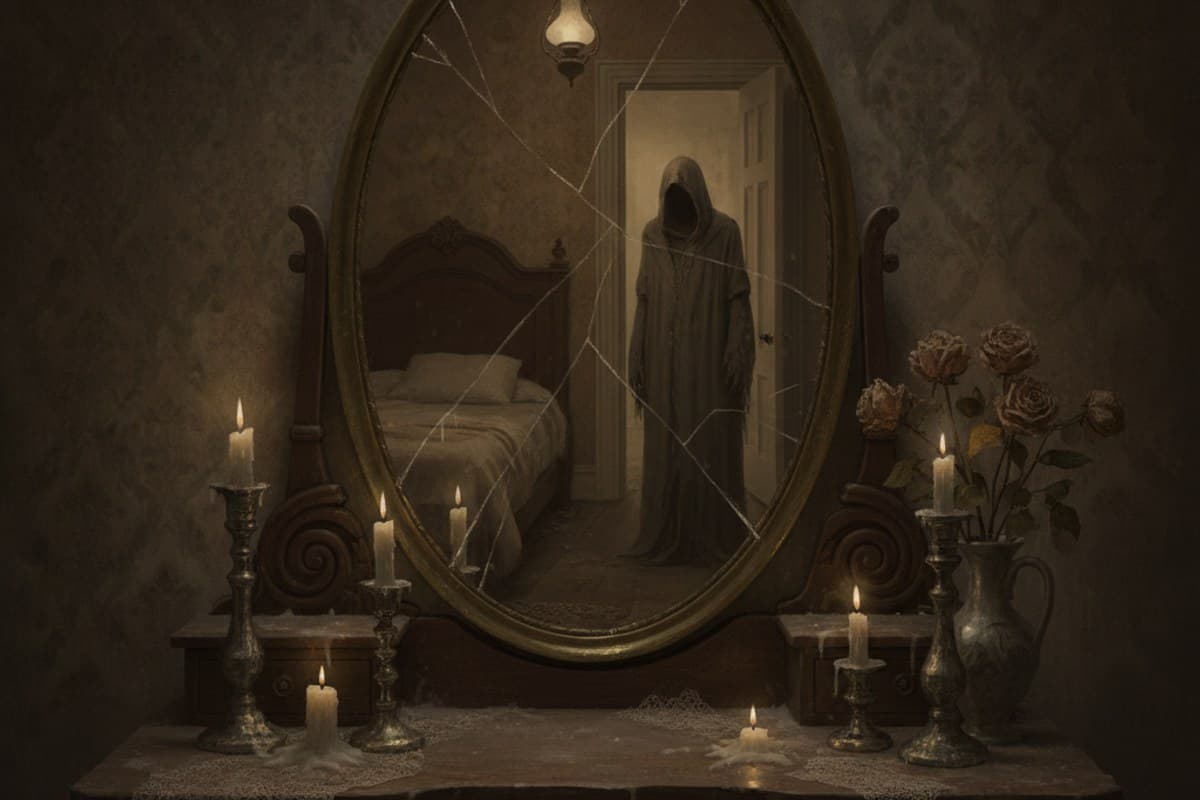
Antique cracked oval mirror in Victorian bedroom reflecting a distant shadowy figure
Cursed Objects

The Mirror That Remembers

A cracked oval mirror rests on a dusty dressing table in an empty Victorian bedroom. The reflection shows the same room decades earlier, with one unfamiliar figure standing near the door. Candlelit still-life composition, faded wallpaper, tarnished brass, delicate ink textures and restrained supernatural tension.

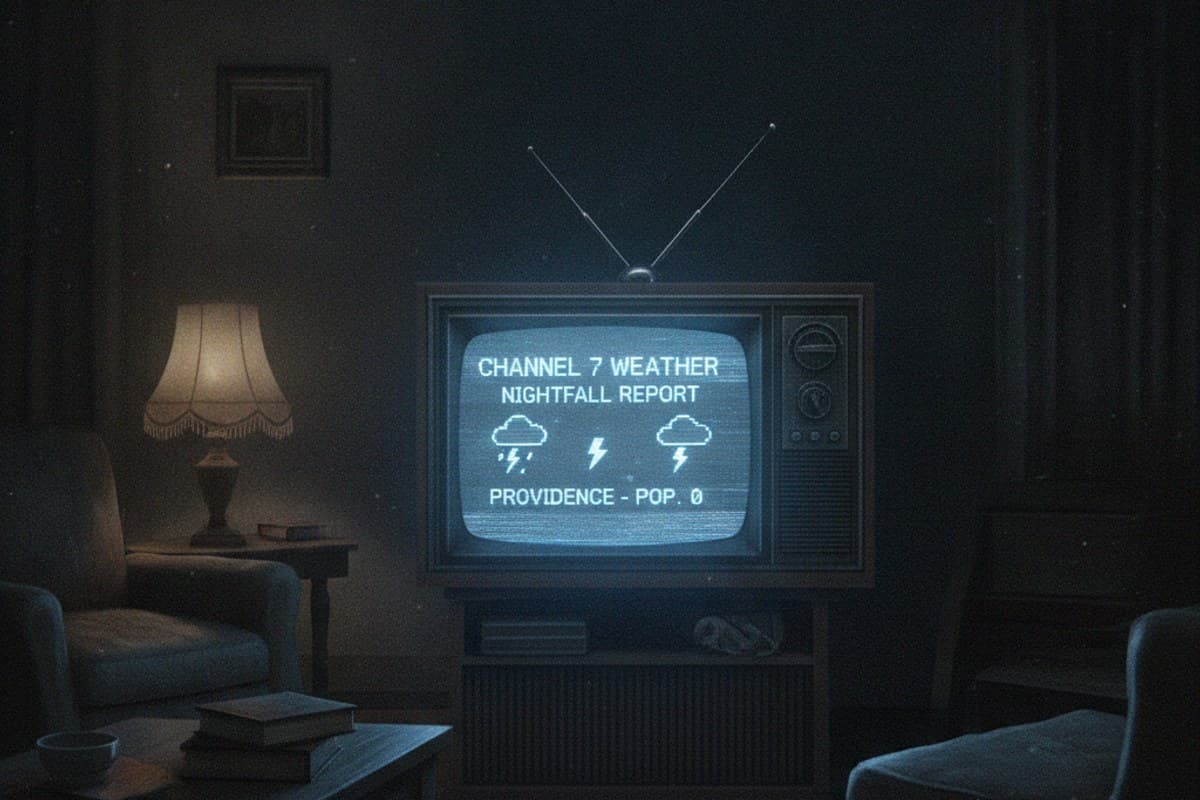
Glowing 1980s television with VHS scan lines displaying late-night static in a dark room
Analog & Retro Horror

Channel Nine at 2:17 A.M.

A 1980s television glows in a dark living room, showing a late-night weather broadcast for a city that no longer exists. VHS scan lines, soft static, a crooked antenna and a dim lamp create unsettling nostalgia. Front-facing framing, limited color, grainy textures and a subtle found-footage horror aesthetic.

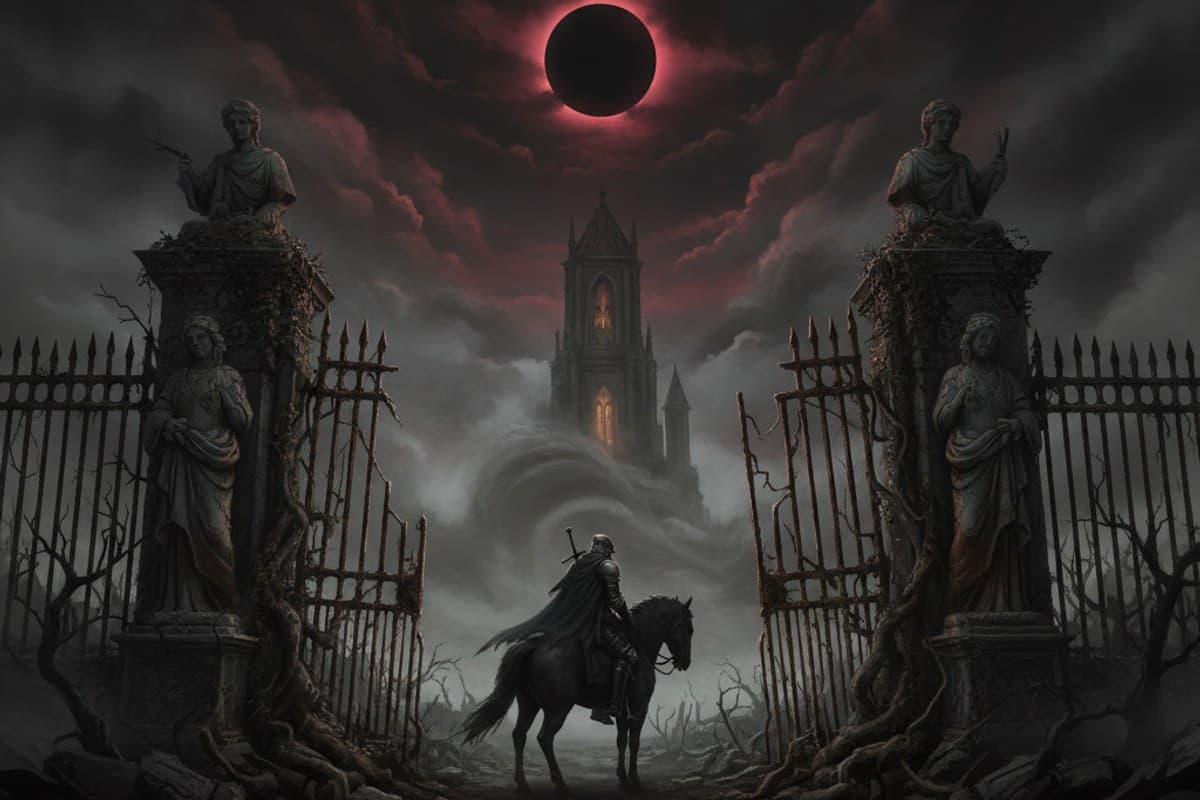
Lone armored knight approaching ruined gothic castle gate beneath a blackened solar eclipse
Dark Fantasy Horror

The Knight at the Ashen Gate

A lone armored knight approaches a ruined gate beneath a blackened eclipse. Dead ivy coils around cracked statues, and a distant bell tower glows through the mist. Wide gothic fantasy illustration with strong silhouette, distressed metal, charcoal clouds, desaturated burgundy accents and a foreboding but non-graphic atmosphere.

These examples describe imaginary scenes; they do not create finished pictures. Adapt the subject, framing and style to your own artwork.

A practical horror art formula

Build tension before revealing the threat.

The strongest dark art ideas often begin with something familiar—a staircase, an empty street, a quiet room—and one detail that feels wrong.

Think like a visual storyteller. Give the viewer a place to look, leave something unexplained and use light to control how much of the scene is revealed.

Negative spaceGothic atmosphereSilhouettePerspectiveTextureColor & light
01 · Choose an ordinary starting point.

A railway platform, farmhouse or narrow hallway gives the viewer an immediate frame of reference. Specific everyday details make the uncanny element more striking.

02 · Add one impossible detail.

A portrait changes position, a window faces an endless sea, or a shadow moves against the light. Choose one central mystery instead of crowding the frame.

03 · Shape what the viewer cannot see.

Use a dark doorway, cropped silhouette, drifting mist or empty foreground. Controlled negative space leaves room for suspense and interpretation.

04 · Let lighting reveal the story.

A candle, fluorescent strip or distant moon can guide the eye toward the focal point. Use contrast and a restrained palette to make the scene readable.

Horror illustration fundamentals

Four Ways to Make Dark Art More Atmospheric

A creepy drawing does not need graphic detail. Framing, visual contrast and environmental clues can turn a simple image into a memorable horror scene.

⌂

Uncanny Familiar Spaces

Make a known setting feel slightly wrong: an empty playground at dusk, a corridor with too many doors, or a house whose windows never align.

◈

Shadow & Negative Space

Decide what stays hidden. Backlighting, silhouettes, close framing and empty areas encourage the viewer to complete the image in their imagination.

▤

Distressed Surfaces & Detail

Peeling wallpaper, rusted railings, wet pavement and worn stone suggest an unseen history. Use texture around the focal point rather than everywhere.

☾

Color, Mood & Lighting

Cold moonlight, amber candlelight and a small sickly green accent create different emotional tones. Keep enough value contrast for the subject to remain legible.

Understand your creative choices

How to Use the Horror Art Prompt Controls

Your settings work together. A haunted mansion in candlelight feels different from the same building under a fluorescent flicker, even before you add a ghost or creature.

Horror type

Sets the storytelling tradition: cosmic uncertainty, psychological unease, haunted architecture, supernatural folklore or retro broadcast horror.

Subject

Identifies the focus of the picture. Use one clear subject such as a locked door, an apparition, a masked figure or an impossible monument.

Fear Intensity

Adjusts how strongly the prompt leans toward unsettling imagery. Lower values can suit quiet mystery; higher values call for heavier suspense and ominous detail.

Mood

Defines the emotion you want the viewer to feel, from melancholy and isolation to eerie calm, anticipation or relentless cosmic dread.

Lighting

Controls what can be seen. Try low-key lighting, moonlit fog, flickering fluorescent tubes, candlelight or a narrow beam from a doorway.

Color palette

Sets the visual temperature. Corroded rust, bone white and pitch black suggest decay; blue-gray and pale gold can feel colder and more distant.

Art style

Shapes how the scene is rendered: charcoal drawing, ink wash, gothic illustration, dark surrealist painting, cinematic concept art or VHS-inspired imagery.

Environment

Establishes the physical context. Choose a place with specific architecture, scale and texture—an attic, deserted subway, ruined chapel or fogbound marsh.

In the live Next.js application, retain the complete Optional Advanced Controls & Engine Flags panel and its original production logic. This HTML is a design and copy reference.

Helpful answers for dark art creators

Horror Art & Creepy Drawing Prompt FAQs

Questions about haunted-house drawings, atmospheric horror prompts, dark illustration styles and creative controls.

What is a horror art prompt generator?+

It is a tool for finding written ideas for eerie drawings, paintings, character concepts and haunted environments. Choose a horror theme, describe the subject and atmosphere, and use the prompt as a starting point for an original artwork.

What are some easy creepy things to draw?+

Try an empty swing moving at dusk, a door with light underneath it, a foggy road, an old doll on a shelf or a staircase disappearing into darkness. A familiar subject with one unusual detail is often easier to draw than an elaborate monster.

How can I make a horror drawing scary without gore?+

Use visual suggestion. Keep part of the scene in shadow, emphasize a solitary light source, and add one strange detail that raises a question. Texture, stillness and perspective can create tension without graphic imagery.

What is the difference between gothic horror and cosmic horror art?+

Gothic horror often draws on old architecture, ruins, romantic darkness and haunting histories. Cosmic horror tends to emphasize incomprehensible scale, strange geometry and the sense that something vast exists beyond human understanding.

How do I create a haunted house art prompt?+

Describe the building, its age, the weather and a focal point. For example: a boarded-up Victorian house after rain, one candle in an attic window, tangled gardens and a low-angle composition in blue-gray twilight.

Which lighting works for dark fantasy or horror illustrations?+

Moonlight and backlighting give readable silhouettes; candles create small warm focal points; fluorescent flicker suits institutional or analog horror. Choose one dominant source and decide what it reveals.

Can I use these prompts for pencil, ink or charcoal drawing?+

Yes. The written prompts can guide pencil sketches, ink illustrations, charcoal studies, digital paintings and mixed-media art. If you draw by hand, the model selection is optional inspiration rather than a requirement.

What are analog horror and liminal-space drawing prompts?+

Analog horror uses the visual language of old broadcasts, videotape artifacts and obsolete technology. Liminal-space art uses transitional places such as empty corridors, waiting rooms and stairwells to create unease through familiar spaces.

What does the Fear Intensity control change?+

It guides the tone of the written idea. A lower setting can favor subtle mystery and quiet unease, while a higher setting emphasizes ominous elements, distorted spaces or a more threatening atmosphere. It does not guarantee a particular emotional response.

Does this tool generate finished horror images?+

No. This page creates written horror and dark art prompts. You can use them for your own artwork or adapt them to a compatible image-generation tool. Model choices affect prompt formatting in the production app, not image rendering on this page.