ArtPromptGenerator
✦ Sci-Fi & Futuristic Worlds Studio

Sci-Fi Art Prompt Generator

Imagine tomorrow’s worlds, one detail at a time.

Our sci-fi art prompt generator helps you imagine cyberpunk cities, alien planets, robots and space stations. Choose a theme, customize technology and lighting, and turn your idea into a drawing or concept-art prompt.

10 futuristic themesTechnology, lighting & environment controlsFor drawing, concept art & image prompts
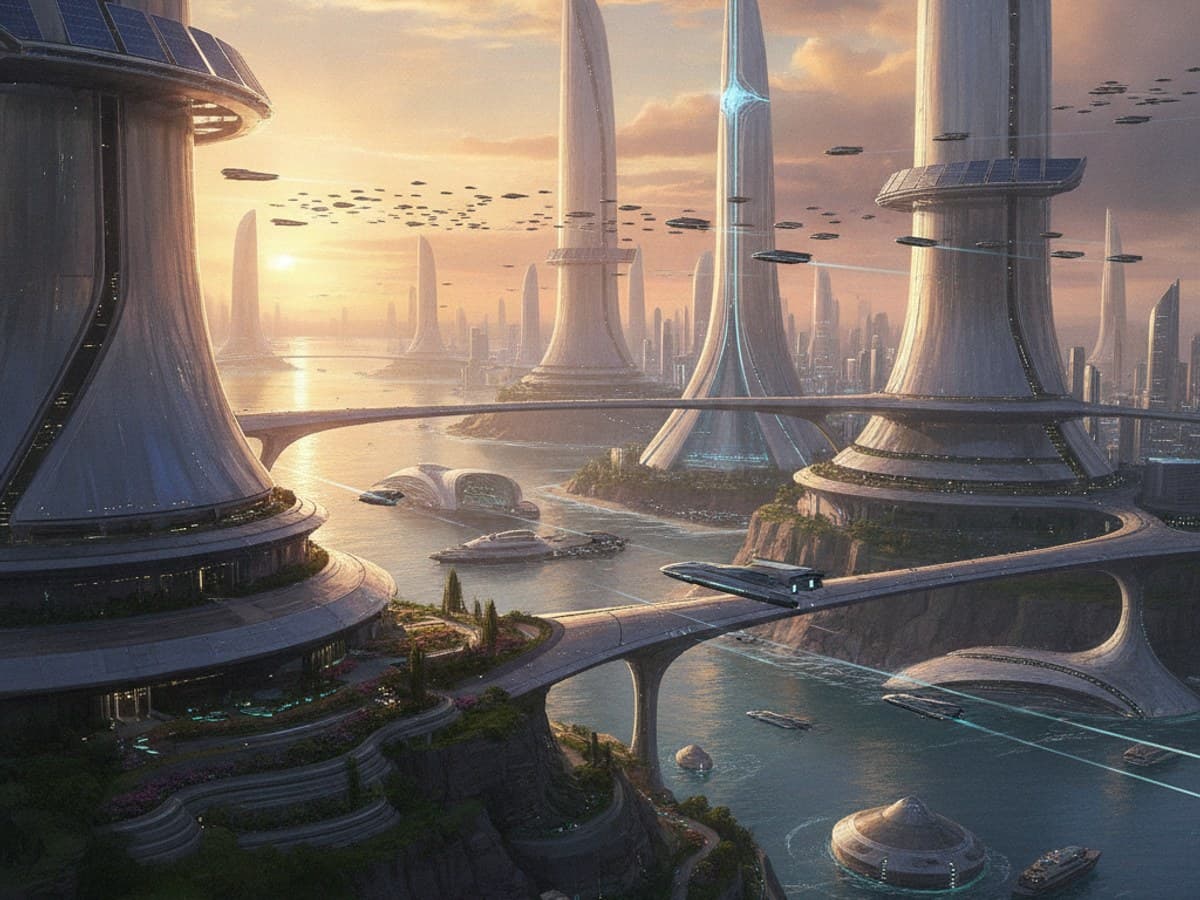
Original digital illustration of a futuristic coastal city with elevated skybridges, sleek towers and flying vehicles at golden hour
✦ Futuristic environment designA city with a story beyond the skyline
Your sci-fi art studio

Build a world from the future

Choose a sci-fi theme, then refine the technology, subject, setting and atmosphere to make your concept more distinctive.

Selected discipline: Sci-Fi & Futuristic Worlds
01

Choose a futuristic theme

Explore neon-lit cityscapes, space missions, alien ecosystems and imagined technologies.

Add a subject, place or technological detail. Your idea should guide the final prompt.

02

Canvas format

Create detailed art prompts you can use with your favorite AI image generator.

Canvas aspect ratio
03

Set the world and its details

Shape the technology, focal subject, environment, mood, light, colors and rendering style.

✧ Optional Advanced Controls & Engine Flags▼
Production Advanced Controls: Fine-tune technological design language, surface materials, holographic displays, mechanical complexity, and visual worldbuilding constraints.
Six sci-fi concepts to explore

Sci-Fi Drawing Prompts & Futuristic Art Ideas

From distant orbital stations to everyday life in a solar-powered city, these original prompts offer specific subjects, perspectives and materials. Copy one, change a detail and build your own scene.

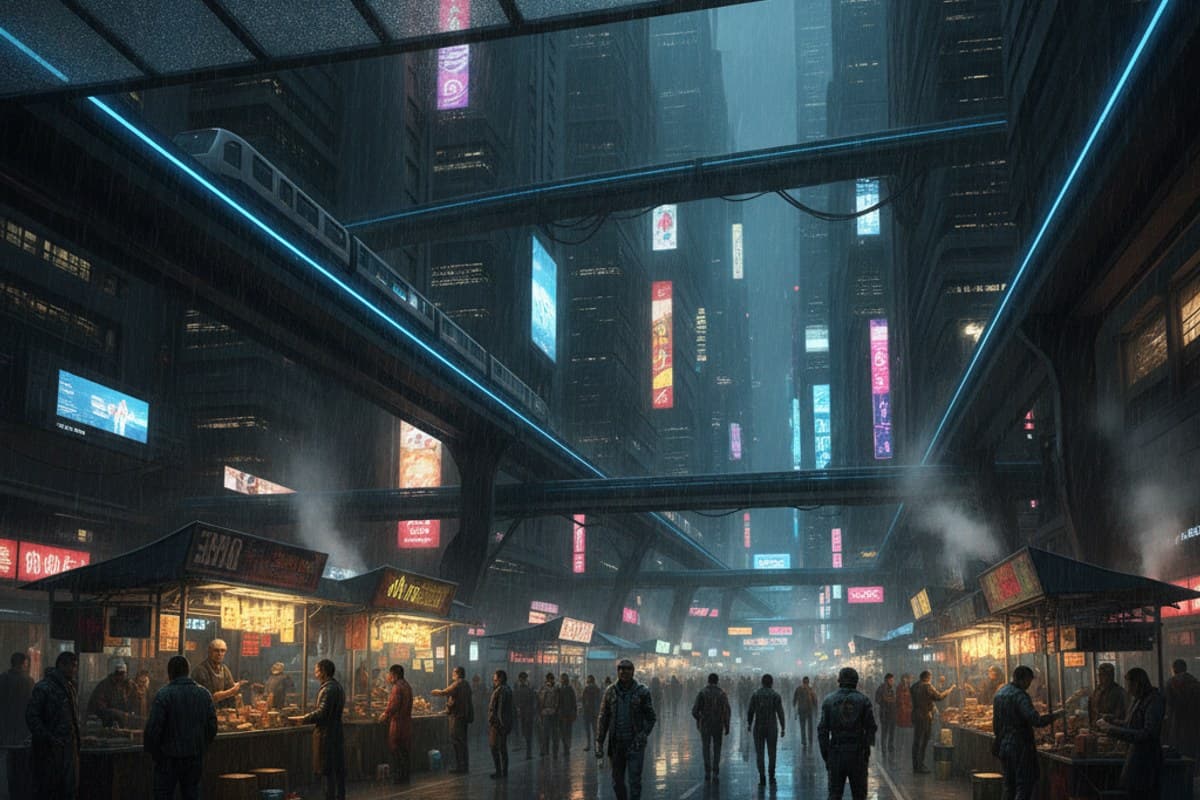
The Night Market Above Neo Harbor: open-air skybridge midnight market on the 92nd floor of a cyberpunk harbor megacity
Cyberpunk Cities

The Night Market Above Neo Harbor

On the ninety-second floor of a crowded harbor megacity, a midnight market spans an open-air skybridge. Food stalls and repair kiosks glow beneath layered transit tracks while rain beads on clear canopy panels. Street-level viewpoint, human figures for scale, wet pavement reflections, cobalt-blue shadows and small amber pools of light.
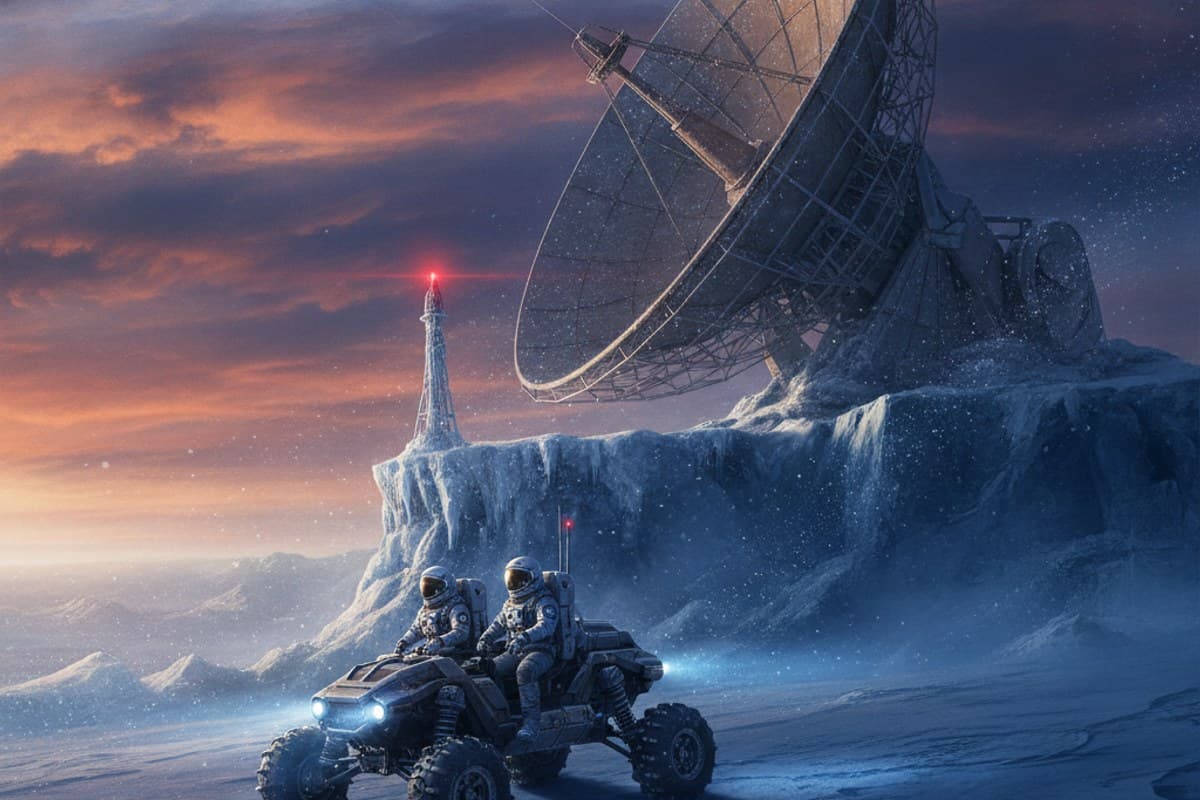
A Message from the Ice Moon: research rover approaching a frozen communication dish on a distant moon
Space Exploration

A Message from the Ice Moon

A two-person research rover approaches a radio dish partly buried in the frozen cliffs of a distant moon. Jupiter-like clouds fill the horizon, and fine ice crystals drift past the rover lights. Wide planetary vista, realistic spacesuit proportions, long blue shadows and one bright signal beacon guiding the eye.

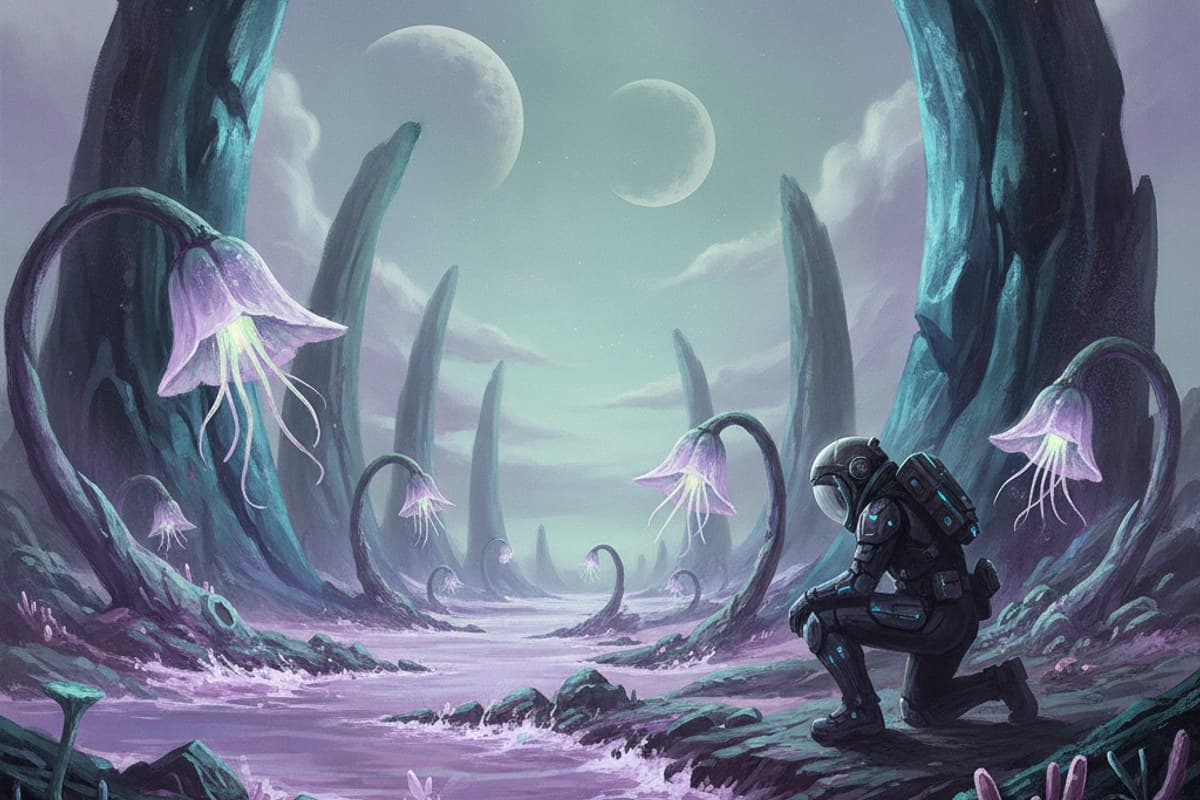
The Violet Tide of Nacre-7: explorer kneeling beside an alien sea with translucent flora and twin moons
Alien Worlds

The Violet Tide of Nacre-7

An explorer kneels beside a shallow alien sea where translucent plants open when the violet tide retreats. Curved mineral pillars line the shore, and two small moons hang above the horizon. Low foreground perspective, unfamiliar but coherent ecology, soft bioluminescence and cool lavender-green atmosphere.

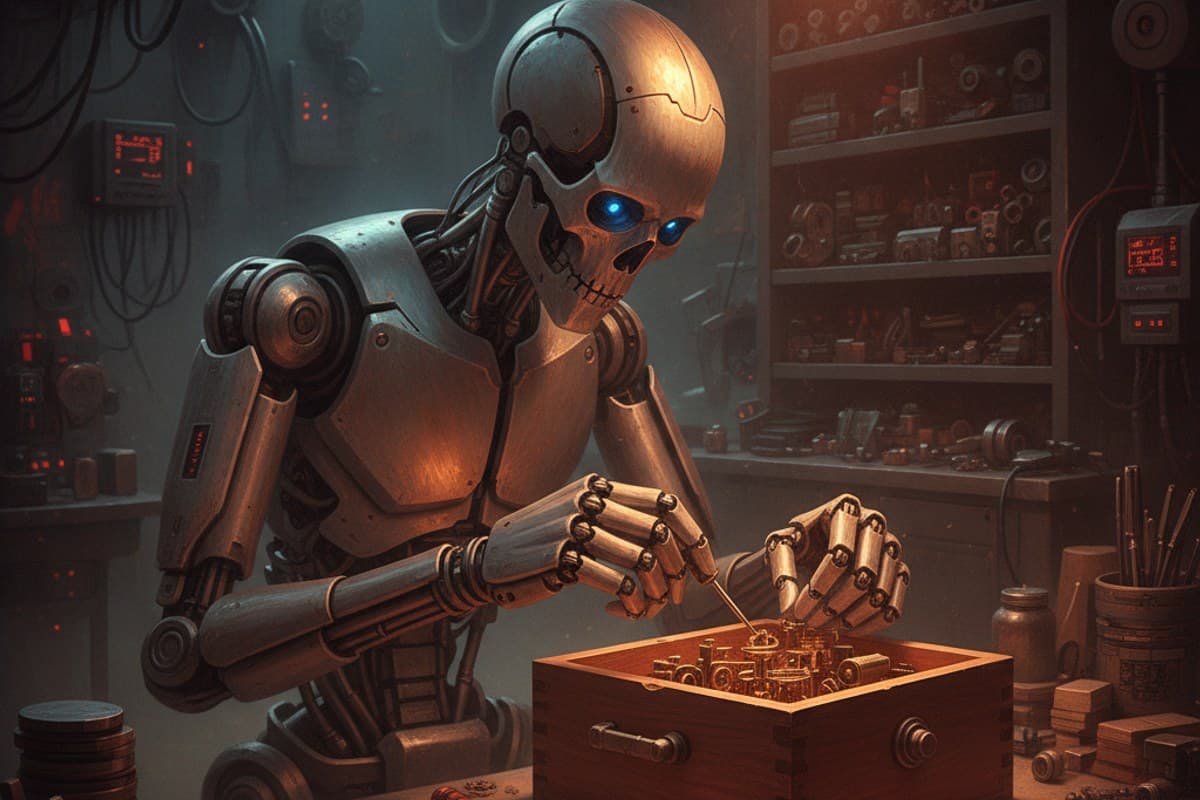
Repair Bay Twelve: service android restoring an antique music box under a solitary workshop lamp
Robots & Androids

Repair Bay Twelve

A weathered service android carefully restores an old music box in an underground maintenance workshop. Hundreds of spare mechanical parts cover the shelves, but a single overhead lamp lights the android’s delicate hands. Medium shot, expressive posture, brushed metal textures, warm copper highlights and quiet visual storytelling.

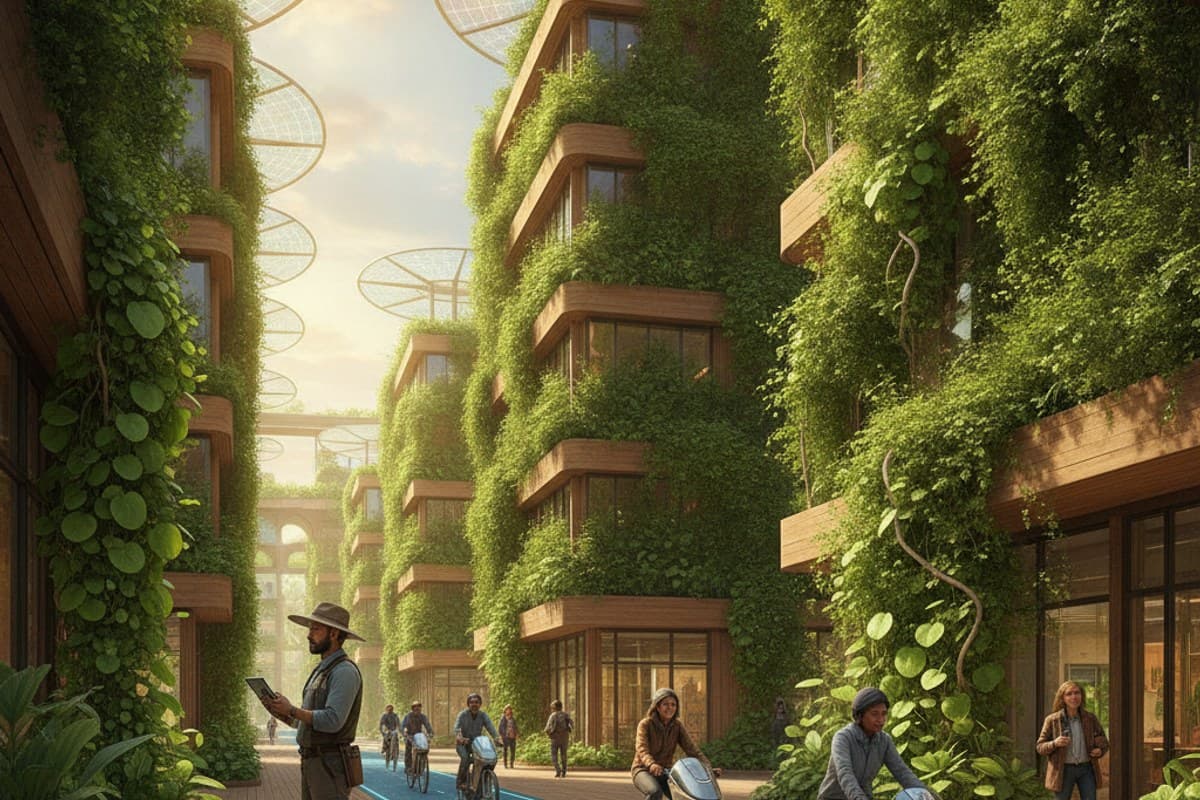
The Garden District in Summer: pedestrian solarpunk street framed by vertical living gardens and solar sails
Biopunk & Solarpunk

The Garden District in Summer

A sunny city neighborhood grows around vertical gardens, shaded pedestrian streets and buildings fitted with solar sails. A botanist checks a living facade while electric bicycles pass below. Eye-level architectural illustration, natural wood and glass materials, leafy green palette, warm sunlight and a hopeful everyday atmosphere.

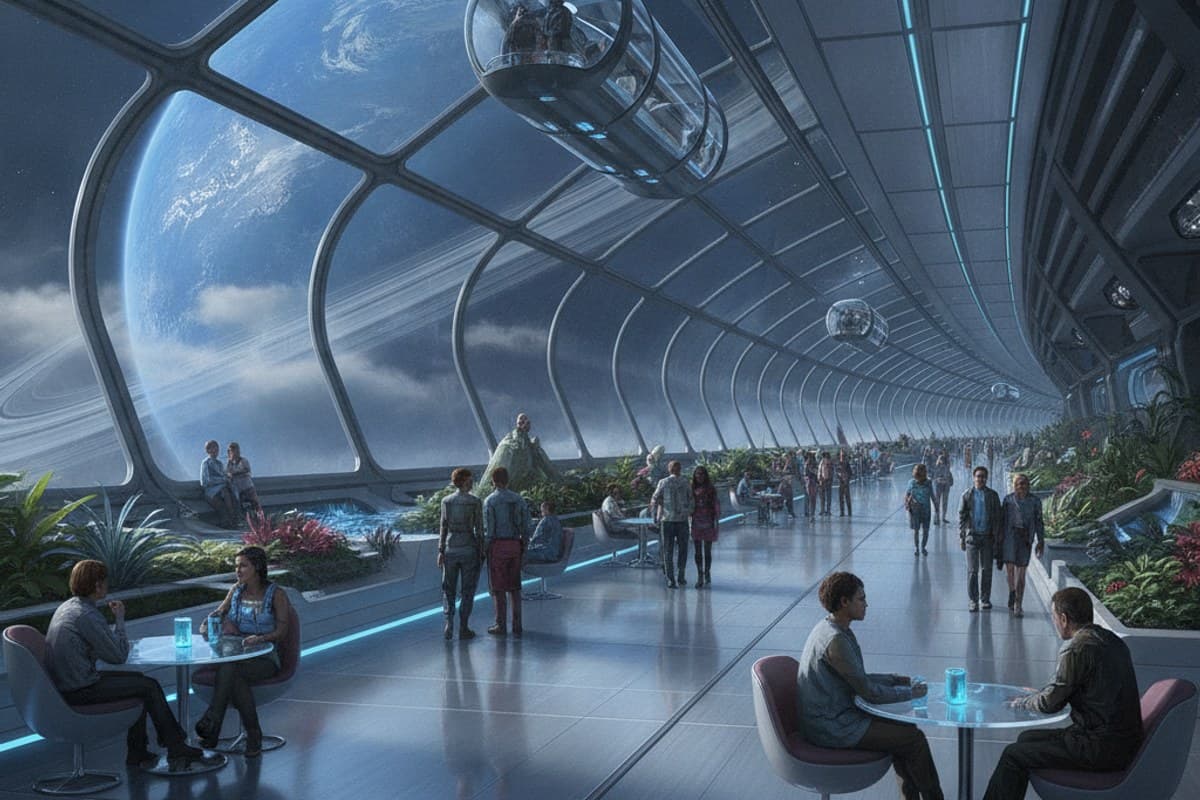
Morning on the Ring Station: curved orbital habitat promenade overlooking a brilliant blue planet
Spacecraft & Stations

Morning on the Ring Station

Inside a large orbital station, residents cross a curved public promenade beneath windows looking toward a blue planet. Gardens, small cafes and transit capsules make the enormous habitat feel like an ordinary neighborhood. Strong vanishing lines, realistic scale cues, diffused morning light and brushed aluminum with soft blue accents.

These examples describe imaginary scenes; they do not create finished pictures. Adapt the subject, framing and style to your own artwork.

A practical sci-fi art formula

Design the world before the spectacle.

Great science-fiction art begins with a question: how would people, machines or habitats work in this imagined future?

Give technology a purpose, let the environment show its age, and place one clear subject where the viewer knows to look. The result feels more like a believable place than a collection of futuristic gadgets.

WorldbuildingScale & perspectiveHard-surface designSpeculative technologyLightingVisual narrative
01 · Decide what has changed.

Choose the major difference from today: how people travel, build homes, use energy or explore space. One clear change gives the setting a coherent foundation.

02 · Pick an everyday focal point.

A courier, scientist, mechanic, commuter or spacecraft crew member can tell us how this world is used. Not every sci-fi scene needs an enormous battle.

03 · Add scale and practical detail.

Show access doors, maintenance rails, weathering, signage and people for proportion. Repeated design logic makes large machines and cities easier to understand.

04 · Let light communicate the mood.

Neon rain creates energy and density; morning sun can make clean solarpunk architecture feel welcoming; sharp laboratory lighting suggests precision and discovery.

Science-fiction illustration fundamentals

Four Ways to Make Future Worlds Feel Real

Futuristic illustrations become more convincing when technology, place and people share a consistent visual language. These four ideas work for concept sketches and finished digital paintings.

⬡

Readable Technology & Silhouettes

Decide how a machine moves, where its joints belong and how a person uses it. Strong silhouettes make robots, mechs and spacecraft easier to read at a glance.

▥

Scale Through Human Details

Use doors, windows, walkways, ladders or tiny figures to show the size of a megastructure. A clear foreground-to-background relationship builds depth.

◈

Environmental Storytelling

Add signs of daily use: worn floor markings, repaired hull plating, rooftop gardens or delivery routes. These clues suggest life beyond the frame.

☼

Color, Atmosphere & Light

Try cool laboratory illumination, neon reflections, solar-gold daylight or a planet-lit horizon. Atmospheric haze can separate a busy skyline into readable layers.

Understand your creative settings

How to Use the Sci-Fi Art Prompt Controls

Each setting adjusts a different part of the imagined world. Keeping the subject, era and environment compatible makes your prompt easier to visualize.

Sci-fi subgenre

Sets the overall direction. Cyberpunk focuses on dense cities and social contrast, space opera on interstellar adventure, while solarpunk imagines more regenerative urban futures.

Technology level

Indicates how advanced the setting should feel, from near-future robotics to interstellar infrastructure. Choose technologies that belong to the same plausible visual era.

Subject type

Names the main thing the viewer should notice: a robot, spacecraft, scientist, vehicle, city street or experimental machine. A precise subject prevents a scattered composition.

Environment

Places the subject within a scene: a station hangar, rainlit rooftop, alien shoreline or sunlit research campus. Include scale and one meaningful environmental detail.

Mood

Sets the feeling of the artwork. Wonder, tension, isolation, optimism and discovery can all describe different futures even with similar technology.

Art style

Changes the visual treatment: industrial concept painting, technical sketch, retro-futurist poster, isometric environment or cinematic digital illustration.

Lighting

Establishes the focal point and sense of depth. Neon reflects off wet streets; rim light outlines a spacecraft; diffuse sunlight helps gardens and glass architecture feel open.

Color palette

Creates visual unity. Cyan and magenta suggest cyberpunk nightlife; silver and indigo suit a spacecraft interior; solar gold and leaf green fit an optimistic ecological city.

For production, preserve the entire Optional Advanced Controls & Engine Flags panel, its model-specific options, validation and existing prompt-construction logic.

Helpful answers for future-world artists

Sci-Fi Art Prompt & Futuristic Drawing FAQs

Find practical answers about cyberpunk city scenes, robot concepts, alien planets, spacecraft, and building believable science-fiction artwork.

What is a sci-fi art prompt generator?+

A sci-fi art prompt generator suggests written ideas for future cities, robots, alien environments, spacecraft and speculative technologies. You can use the results to plan sketches, digital paintings, concept art or prompts for compatible image tools.

What are some easy sci-fi things to draw?+

Start with a delivery robot, a compact shuttle, a street sign in a future city, a domed greenhouse or an astronaut standing beside a strange rock formation. Simple shapes and one memorable detail are enough to start.

How do I write a cyberpunk city art prompt?+

Name a location, the time of day, a focal subject and the light sources. For example: a crowded elevated train stop after rain, tiny commuters under glowing signage, a low-angle view and reflections in blue and amber.

What is the difference between cyberpunk and solarpunk art?+

Cyberpunk often depicts dense high-tech cities, neon-lit streets and social tension. Solarpunk imagines technology working alongside communities and living systems, using elements such as gardens, daylight, low-impact transport and renewable energy.

How can I make a futuristic city look believable?+

Show how people use the place. Walkways, stairs, transit lines, repair panels, signs, weathering and tiny figures help viewers understand a city’s scale and function. Give different buildings a shared visual logic.

How do I design a robot or mech drawing prompt?+

Describe its purpose first: rescue, exploration, construction, farming or defense. Then specify its silhouette, size, joints, materials, working environment and a pose that reveals what it does.

What makes a strong alien planet art prompt?+

Give the planet a distinct landscape, atmosphere, light source and ecosystem. Unusual geology or plant life is more effective when the elements feel related rather than randomly combined.

Which aspect ratio works for space art and futuristic architecture?+

A wide ratio such as 16:9 can suit starships and panoramic city scenes. A tall 9:16 or 2:3 canvas emphasizes towers, rockets and vertical structures. Square framing works well for compact environment or object studies.

Can I use sci-fi prompts for pencil drawing or concept art?+

Yes. Use them for quick sketchbook thumbnails, vehicle studies, environment design, technical-looking line art, digital painting or storyboarding. The written idea is adaptable to your preferred medium.

Does this page create finished science-fiction images?+

No. It generates written sci-fi art prompts and drawing ideas. You can interpret them yourself or adapt them to a compatible image-generation service. Model selectors in the production app guide prompt formatting, not direct image rendering here.