ArtPromptGenerator
✦ Historical & Alternate Eras Studio

Historical Art Prompt Generator

Make a moment from another time visible.

Our historical art prompt generator helps you explore ancient cities, medieval life, Victorian streets and imagined timelines. Choose an era, shape the setting, and create a drawing or illustration with thoughtful period details.

10 historical & alternate themesEra, costume & environment controlsFor sketching, painting & concept art
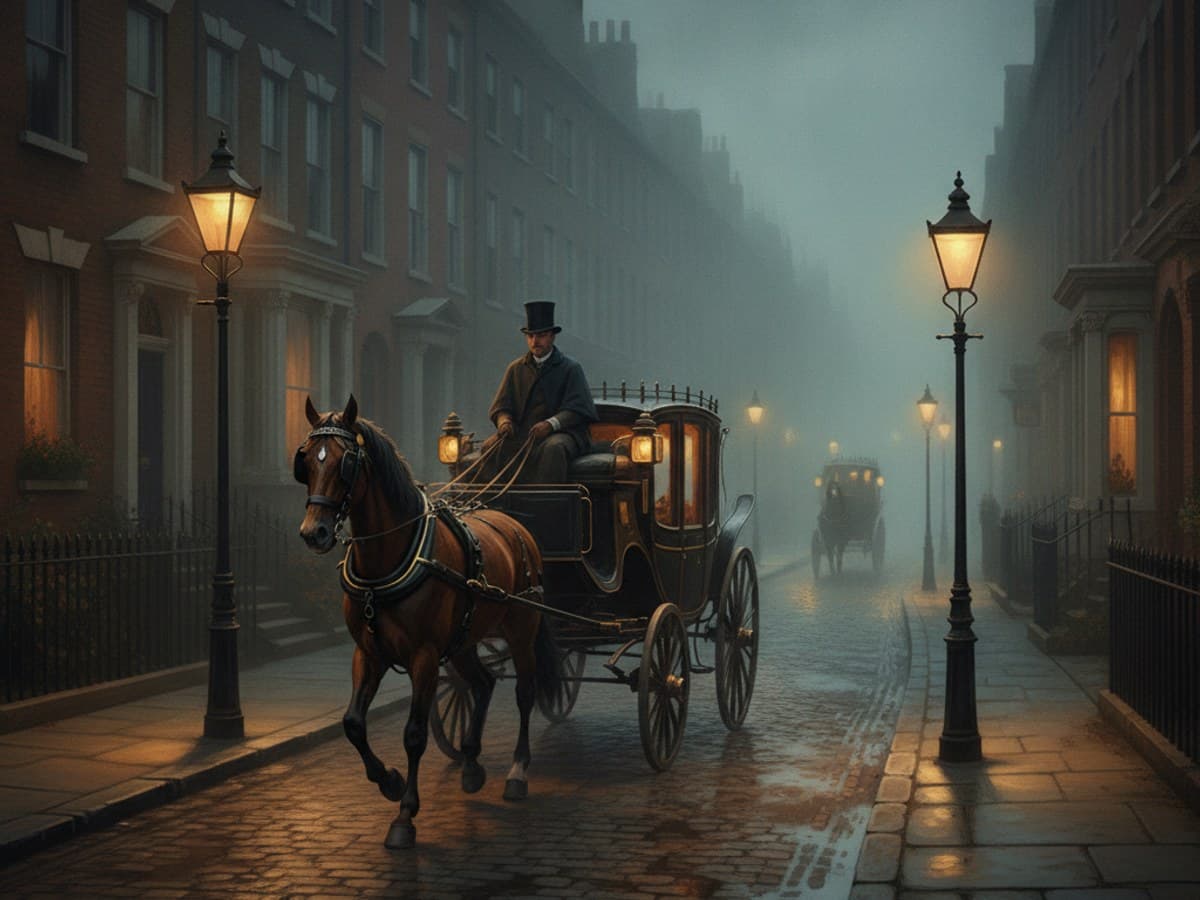
Horse-drawn hansom carriage on a misty cobblestone London street at twilight with glowing gas lamps and Victorian brick townhouses
Victorian Streetscape

Late-nineteenth-century gaslit evening, rain-slicked cobblestones and period transport

✦ Historical & Alternate Studio

Create a scene from another century

Choose a historical period or alternate timeline, specify clothing and setting, and shape written drawing and concept-art ideas.

1. Choose a historical or alternate-era theme

Select a time period or speculative timeline to ground material details.

10 Themes

2. Canvas format

Create detailed art prompts you can use with your favorite AI image generator.

Canvas Aspect Ratio

3. Set the story, setting and style

Tune the era, civilization, subject, clothing and palette settings.

Optional Advanced Controls & Engine FlagsMaterial culture, period props, social class and timeline divergence
▼
Six era-inspired scene ideas

Historical Drawing Prompts & Alternate History Art Ideas

Explore these original scene prompts as foundations for your sketches, paintings and digital illustrations. Each example suggests a setting and focal activity while encouraging careful historical research.

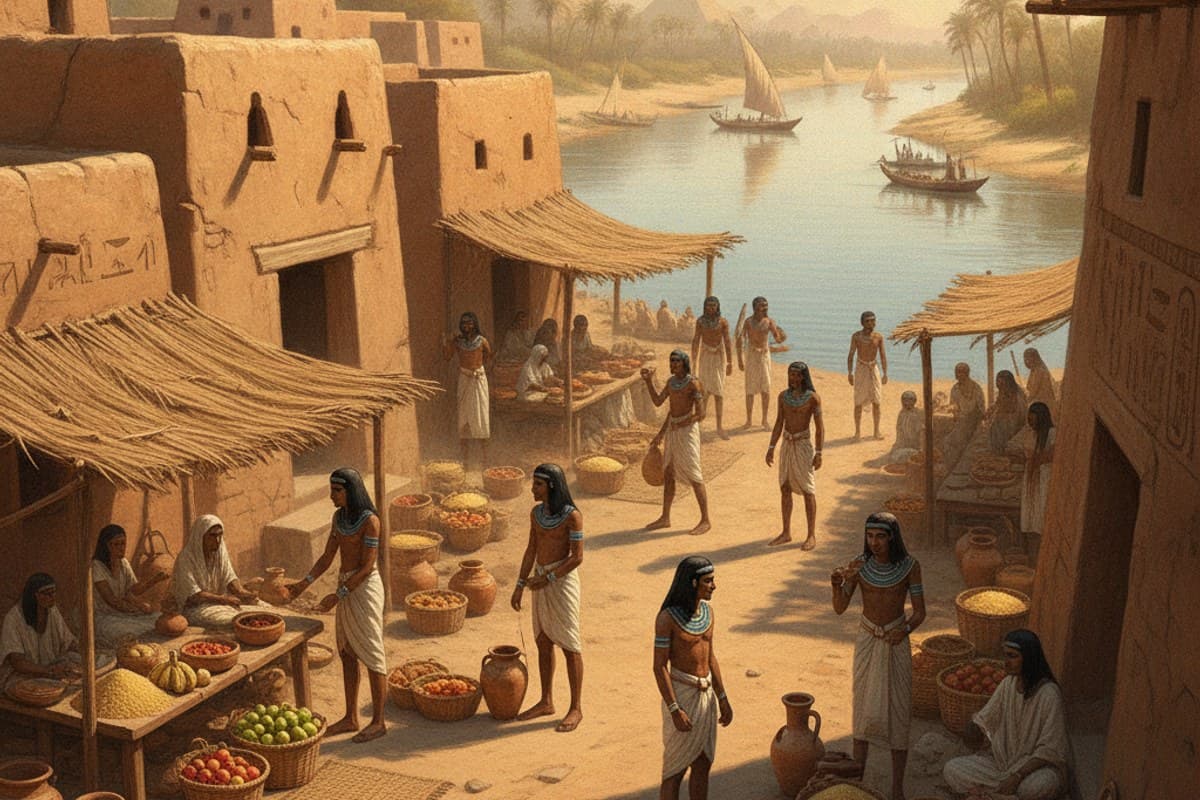
A Morning Market in Ancient Egypt: bustling trade along the Nile with grain baskets, pottery vessels and sunbaked mudbrick buildings
Ancient Daily Life

A Morning Market in Ancient Egypt

Draw a small market beside the Nile in an ancient Egyptian town, with baskets of grain, pottery vessels, reed mats and mudbrick buildings. Place the vendors in the middle ground and use warm morning light to describe textures. Treat garments and tools as details to research rather than assuming every feature is historically exact.

Creative Interpretation
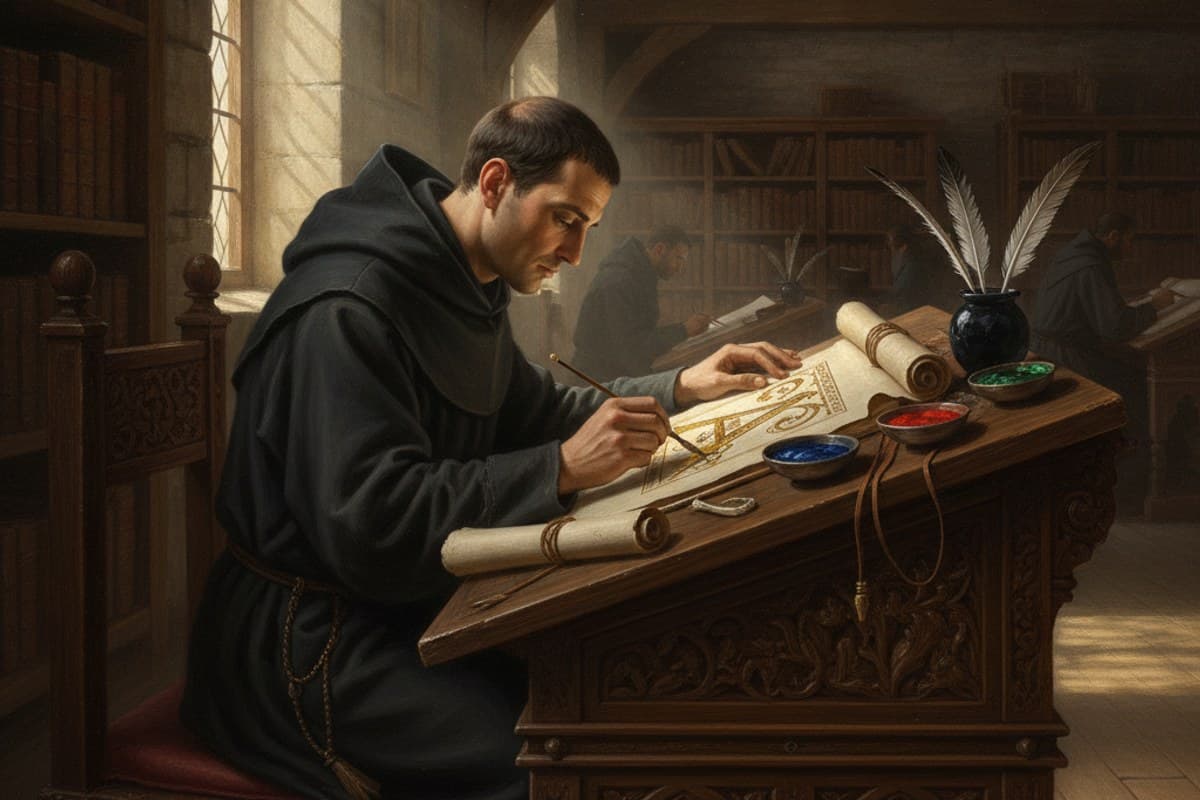
The Manuscript Workshop: medieval scribe illuminating a gilded initial on parchment by soft window light
Medieval Craft

The Manuscript Workshop

Illustrate a late-medieval manuscript workshop as a craftsperson paints an initial letter at a desk. Show parchment, pigments, quills and carefully arranged tools. Use a side window as the main light source, with shelves and another worktable fading into the background. Keep the work area more important than fantasy decorations.

Creative Interpretation
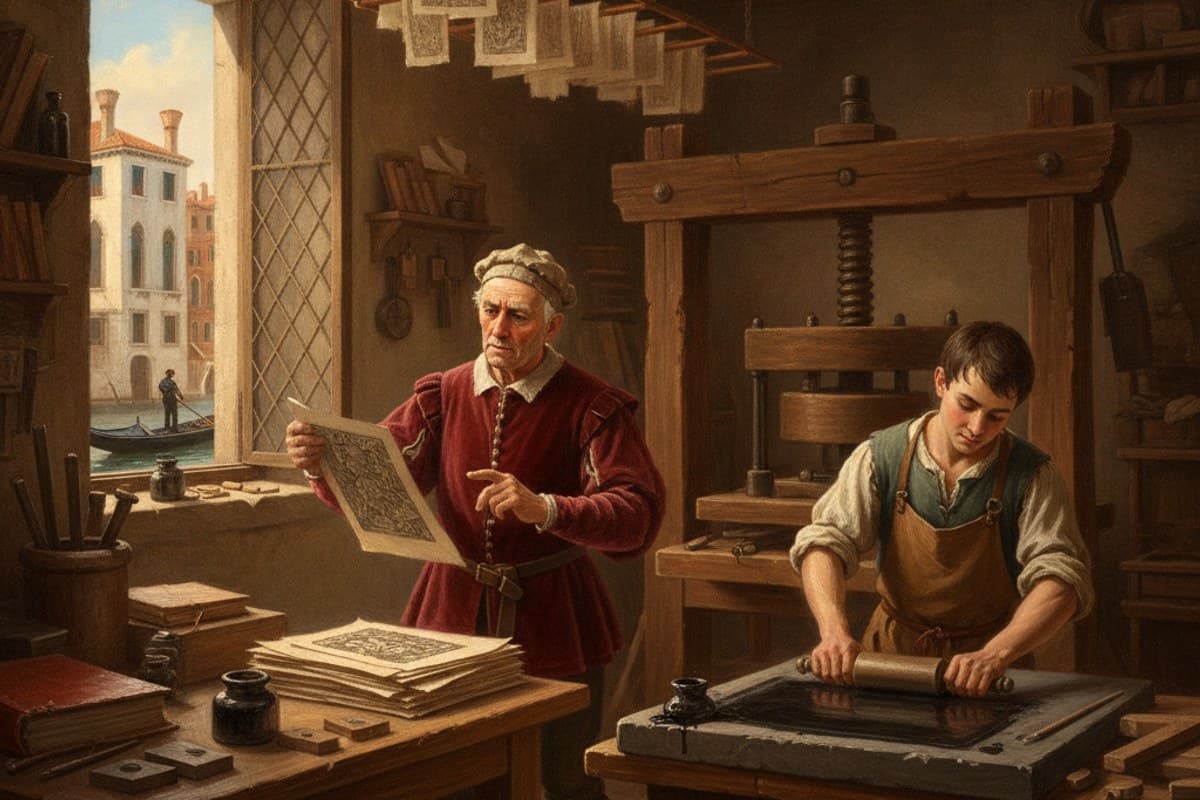
A Printmaker in Renaissance Venice: craftsperson pulling a woodcut print in a timbered canal workshop
Renaissance Scene

A Printmaker in Renaissance Venice

Picture an imagined sixteenth-century Venetian print workshop. A craftsperson checks a woodblock print beside stacked paper while another worker prepares ink. Include workshop tools, timber beams and a glimpse of the canal outside. Build the composition around one active gesture and a restrained palette of warm ochre, ink black and stone blue.

Creative Interpretation
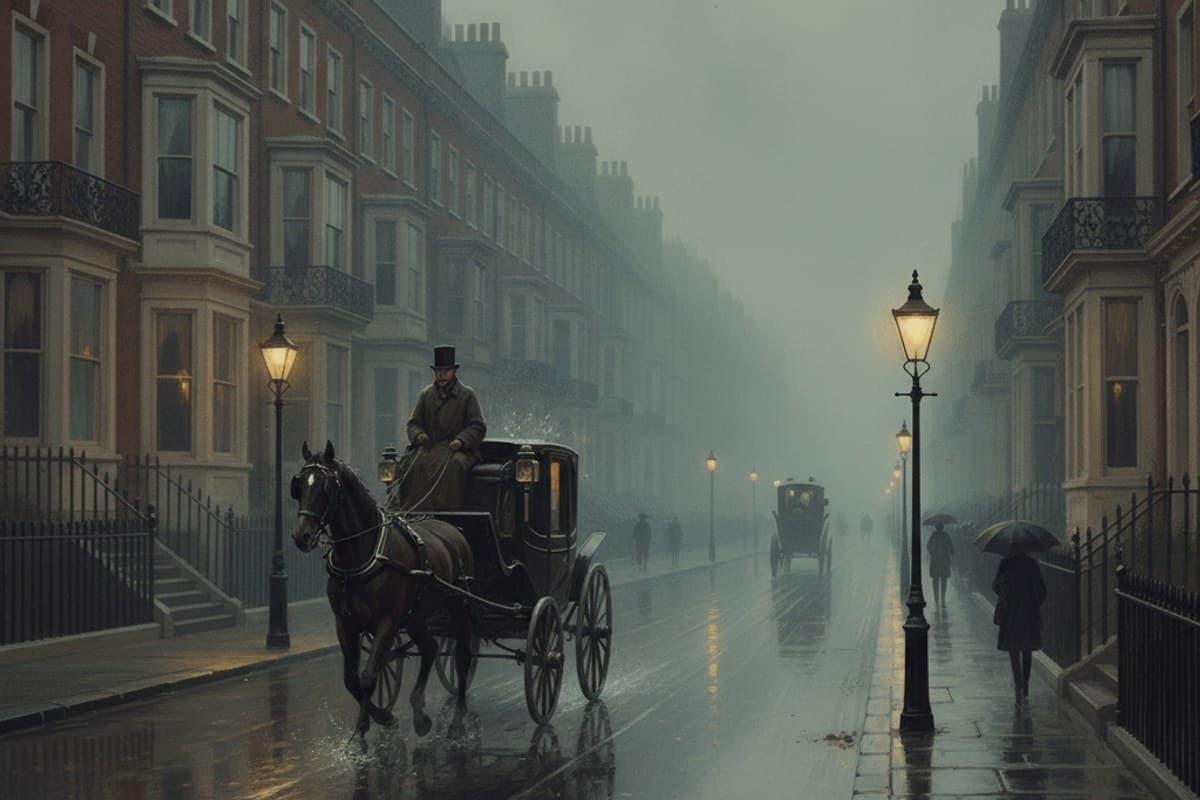
Gas Lamps After the Rain: Victorian London street with horse carriage reflections on wet cobblestones at dusk
Victorian Street

Gas Lamps After the Rain

Draw an imagined London street in the late nineteenth century after rainfall. A horse-drawn carriage moves along cobblestones beneath gas lamps, and distant townhouses disappear into mist. Use warm lamp reflections against a blue-gray evening. Clothing, street surfaces and transportation should follow your chosen decade.

Creative Interpretation
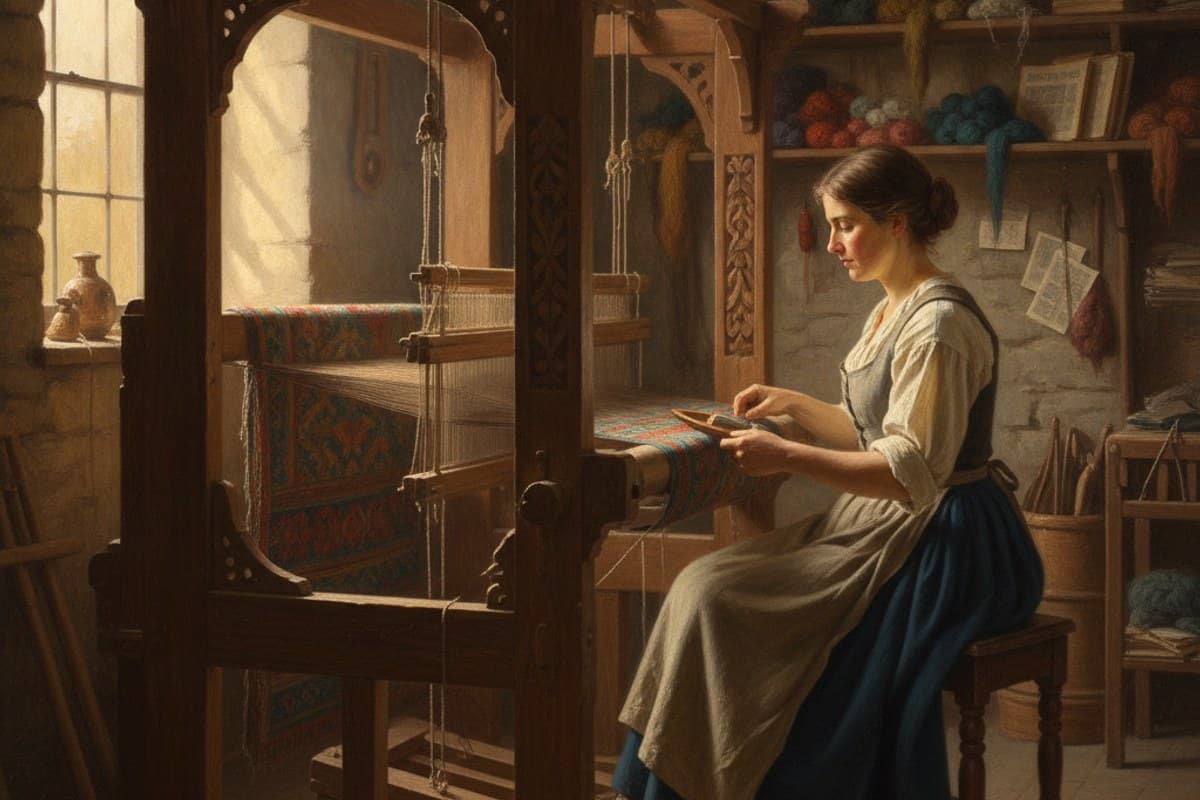
A Weaver at the Workbench: nineteenth-century textile artisan working at a wooden handloom in natural side light
Historical Portrait

A Weaver at the Workbench

Create a respectful portrait of a nineteenth-century textile worker sitting beside a wooden loom. Focus on their hands, fabric texture and natural window light. Keep clothing, tools and the room appropriate to a specific region you choose after research. The worker’s expression and posture should carry the story.

Creative Interpretation
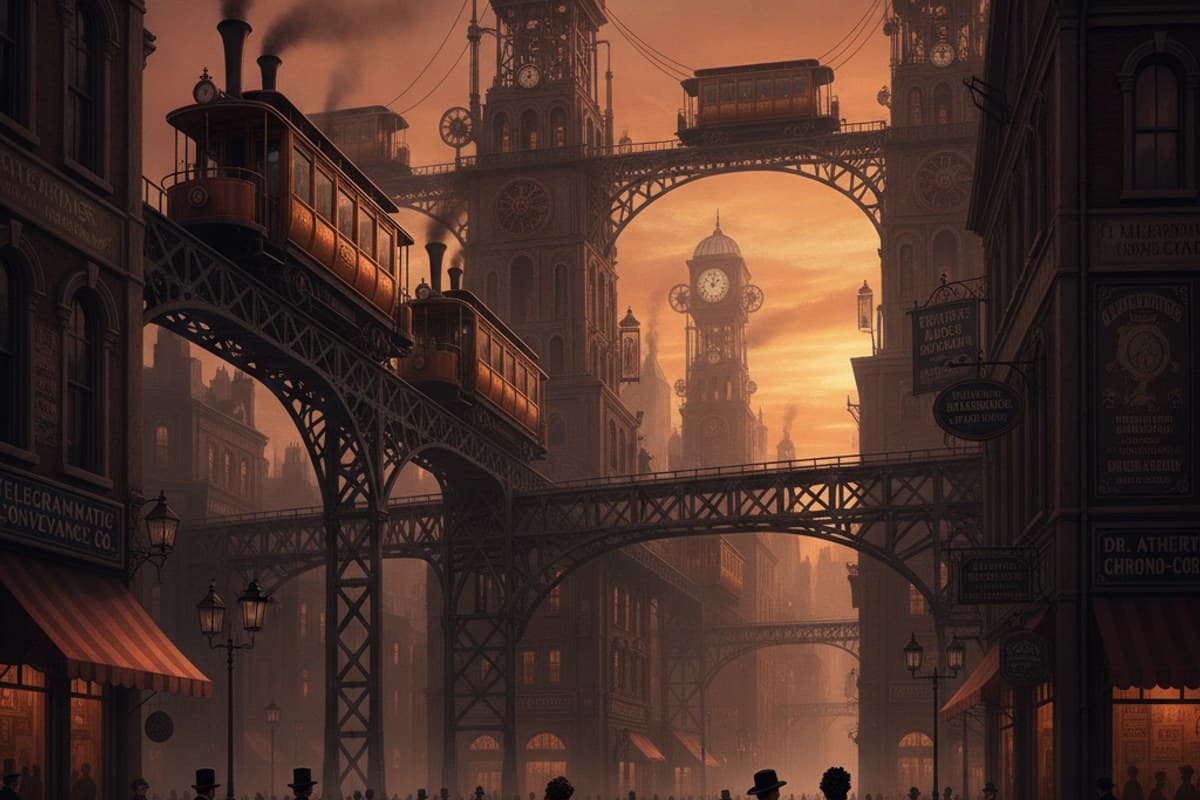
The Clockwork Telegraph City: alternate 1890s cityscape with elevated mechanical transit lines and copper steam towers
Alternate History · Fiction

The Clockwork Telegraph City

Invent an alternate 1890s city where elevated trams run beside immense mechanical telegraph towers. Dress the pedestrians in period-inspired silhouettes but make the clockwork transport clearly speculative. Frame the city from a station platform, mixing smoky copper light, riveted steel and hand-painted advertisements. This is fictional worldbuilding, not a historical reconstruction.

Creative Interpretation
A simple historical art formula

Start with a place, a period and a human story.

Historical art feels more convincing when you can tell what people are doing, where the scene is taking place and which details belong to that particular time. A single lantern, fabric pattern or workshop tool can tell a larger story. For alternate history, keep the setting coherent while making fictional changes easy to recognize.

Period researchMaterial cultureArchitectureCostume studyCompositionAlternate timelines
01 · Choose a specific time and place

Clear Direction

Ancient Alexandria, a medieval market or late-Victorian London offers clearer visual direction than an unspecified “old city.” A date range helps you research the right details.

02 · Give the scene an activity

Focal Action

A mason setting stones, a printmaker preparing ink or a traveler arriving at a station provides a focal action. The artwork becomes a moment, not a catalog of props.

03 · Use evidence as visual reference

Reliable Sources

Look for reliable museum collections, surviving buildings, excavated objects and historical paintings. Remember that photographs only exist for later periods.

04 · Separate fiction from reconstruction

Imagined Timelines

Alternate history welcomes surprising inventions and changed events. Describe those scenes as imagined timelines instead of claiming they portray what really happened.

History illustration fundamentals

Four Details That Bring a Past Era to Life

Whether you draw an ancient settlement or paint a nineteenth-century street, these practical art decisions help your scene look considered rather than vaguely “historical.”

⌂

Architecture Sets the Place

A roofline, street width, courtyard or stone arcade can tell viewers where the action happens. Research region-specific forms and avoid using the same castles or columns for every society.

♧

Clothing Suggests Time and Role

Materials, cut, layers and workwear reveal what a character does. A practical craft apron tells a different story from ceremonial dress or military uniform.

☼

Light Reveals Material

Use directional light to show brick, timber, bronze, cloth and worn stone. Gaslight, candlelight and daylight produce different scenes—and belong to different settings.

◈

Composition Creates a Moment

Choose a focal subject, then organize the foreground, middle ground and distance around it. Perspective, gesture and negative space guide the viewer through the historical scene.

Get more from the history art controls

How the Historical Art Prompt Controls Work

Each field changes the visual story. Combine the era with specific subjects and materials, then use mood, style and color to shape the final drawing prompt.

Historical period

Choose the century or era first. A narrower period makes it easier to select clothing, transportation, tools and architecture that belong together.

Region or civilization

Name the place or society rather than treating “medieval” or “ancient” as one universal style. The same century may look different in West Africa, East Asia and Europe.

Subject type

Describe one clear subject or activity, such as a market stall, carriage, weaver, palace entrance or portrait. It gives the viewer a reason to look at the scene.

Clothing and equipment

Add garments and tools that suit the activity. If you are aiming for accuracy, verify the era and region instead of borrowing details from unrelated centuries.

Environment

Specify streets, interiors, workshops, waterways or landscapes. Buildings, building materials and street furniture help place the subject in context.

Mood

Choose atmospheric, lively, reflective or dramatic based on the story. Mood works through gesture, space and lighting—not just descriptive adjectives.

Art style

Decide whether the result is a watercolor sketch, historical painting, ink drawing or modern concept-art interpretation. A period-inspired style is not proof of authenticity.

Color palette

A restrained set of pigments makes scenes cohesive: sepia and umber for warm nostalgia, slate and cream for rainy streets, or mineral greens and ochres for landscape studies.

Practical answers for historical artists

Historical Art Prompts: Frequently Asked Questions

Helpful answers about history drawing ideas, period accuracy, costume design, vintage scenes and alternate-history illustration.

What is a historical art prompt generator?▼
A historical art prompt generator provides written ideas for drawing or painting scenes inspired by past time periods. You can choose a setting, subject, clothing, mood and style to create a prompt for your sketchbook, illustration or a compatible image tool.
What are easy history drawing ideas for beginners?▼
Try a single object or quiet scene: an old lantern, a clay jar, a medieval arched doorway, a vintage railway ticket or a market basket. Start with shape and light before adding a busy street or large historical crowd.
How do I make a Victorian era drawing prompt?▼
Specify a place and a decade, then add a believable activity and period details. For example, a rainy London street with a horse-drawn carriage and gas lamps in the late nineteenth century. Check clothing and transportation if you need historical accuracy.
What details make a medieval scene believable?▼
Choose a region and period, then consider building materials, trades, tools, clothing and how people used the space. A workshop with timber beams, parchment and hand tools often communicates more than a generic castle full of anachronistic objects.
Can I create art prompts about ancient civilizations?▼
Yes. Ancient Egypt, Mesopotamia, the Indus Valley and other societies offer different architectural and daily-life subjects. Use reliable archaeological and museum references, especially where the original appearance of an object or building is uncertain.
What is the difference between historical art and alternate history art?▼
Historical art aims to interpret people or settings from the past, sometimes using researched visual evidence. Alternate history is fictional storytelling that imagines a timeline in which events or technologies developed differently. Label your alternate timeline clearly.
How can I avoid anachronisms in my artwork?▼
Narrow the date and location, then check everyday objects, clothing, transport, weapons and architecture against trustworthy references. Do not assume one “old-fashioned” style belongs to every century.
Are these prompts useful for period costumes and character portraits?▼
Yes. Use the Clothing and equipment, Historical period and Region or civilization fields to plan garments, workwear and accessories. You can focus the resulting idea on a portrait, fabric study, costume sheet or a character in a historical environment.
Which art styles work well for historical illustration?▼
Graphite studies, ink illustrations, watercolor sketches, oil-painting approaches and digital concept art can all work. Choose the style for its visual purpose; a sepia filter or antique texture alone does not make a scene historically accurate.
Does this tool generate finished historical pictures?▼
No. It generates written art prompts and visual ideas. You can draw or paint them yourself or adapt the text for a compatible image tool. Model selection in this reference is about prompt formatting, not producing a finished image on this page.